When we set out to build Swallow Base, the obvious path was clear: find cheap office space in a Japanese city, throw in some bean bag chairs and a coffee machine, and market it to digital nomads. Every coliving company in Asia was doing exactly that. The pitch writes itself: "Work from Shibuya. Live in a capsule. Hustle surrounded by neon."
We went the other direction entirely. We chose onsen ryokans in rural Japan as our base. Not because we are contrarians, but because we spent enough time in both environments to know which one actually makes remote workers do better work.
The problem with optimized spaces
Modern coworking spaces are engineered for productivity. Standing desks at the correct height. Lighting calibrated to circadian rhythms. Acoustic panels tuned to suppress conversation without creating silence. The irony is that these hyper-optimized environments often produce the opposite of what they promise. When every detail is designed to eliminate friction, you end up in a space that feels frictionless in the worst way: sterile, forgettable, interchangeable with a thousand other offices in a thousand other cities.
Remote work was supposed to free us from the office. Instead, we rebuilt the office in co-living spaces and called it freedom.
The ryokan offers something different. Not optimization, but rhythm. Not efficiency, but attention. The difference matters more than most people realize until they experience it.
Toji and the rhythm of onsen life
The Japanese concept of toji (湯治) refers to the practice of extended hot spring stays for healing and restoration. For centuries, people traveled to onsen towns and stayed for weeks, sometimes months, letting the mineral-rich waters and the pace of rural life repair what ordinary life had worn down. Toji was never a luxury. It was maintenance — as practical as sharpening a blade.
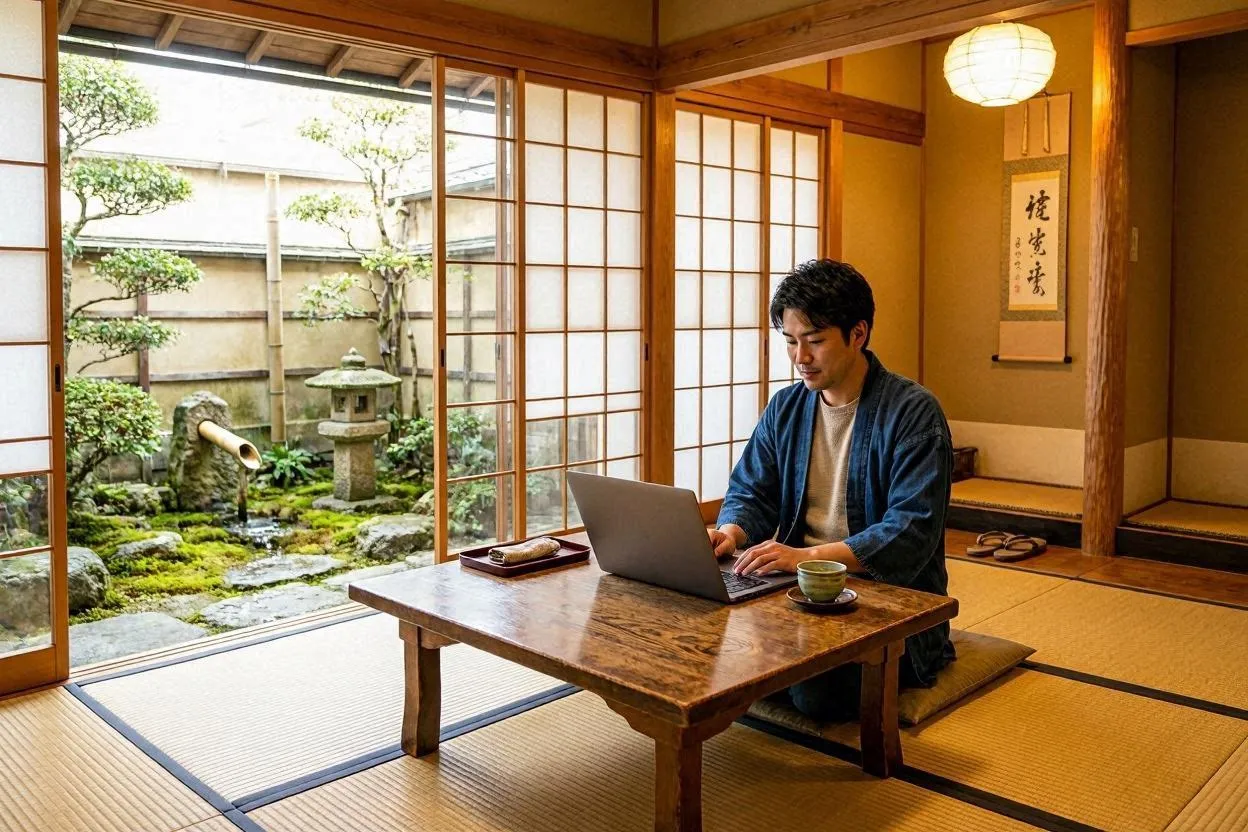
At a ryokan, the day has a natural structure that no productivity app can replicate. You wake to the smell of miso and grilled fish from the kitchen downstairs. Breakfast is at eight, laid out on lacquerware in a room overlooking the garden. The bath is open by six for anyone who wants to start the day in the water. By nine, the common spaces are quiet, the Wi-Fi is steady, and the only sound is cicadas or rain, depending on the season.
"The best workspace is not the one that eliminates distractions. It is the one that replaces bad distractions with good ones — birdsong instead of Slack notifications, the sound of water instead of traffic."
— Swallow Base Philosophy
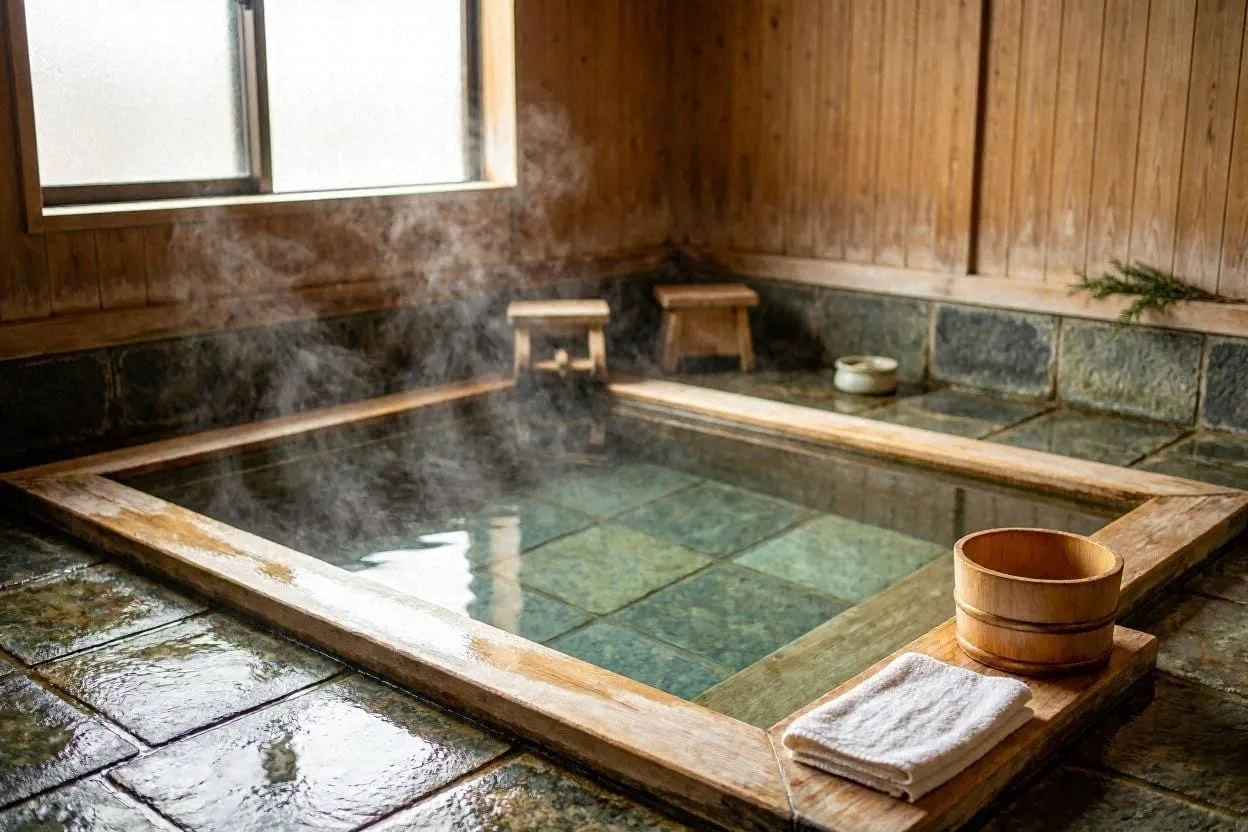
The afternoon onsen becomes a reset point. You leave your laptop, walk to the bath, and spend thirty minutes doing nothing but soaking. This is not a break — in the way that scrolling Twitter on a couch is a break. This is a genuine neurological shift. Hot water immersion activates the parasympathetic nervous system. Cortisol drops. The mind loosens. When you return to work, the problems that felt stuck at 2pm often come apart by 3pm.
Ambient environment shapes creative output
There is a growing body of research on how ambient environment affects cognitive performance. Moderate background noise improves creative thinking. Natural views reduce mental fatigue. Exposure to nature — even through a window — increases working memory. A ryokan in the mountains of Saga Prefecture delivers all of these without trying. The environment is not designed for productivity. It just happens to produce it, because it was designed for something deeper: human comfort across centuries of refinement.
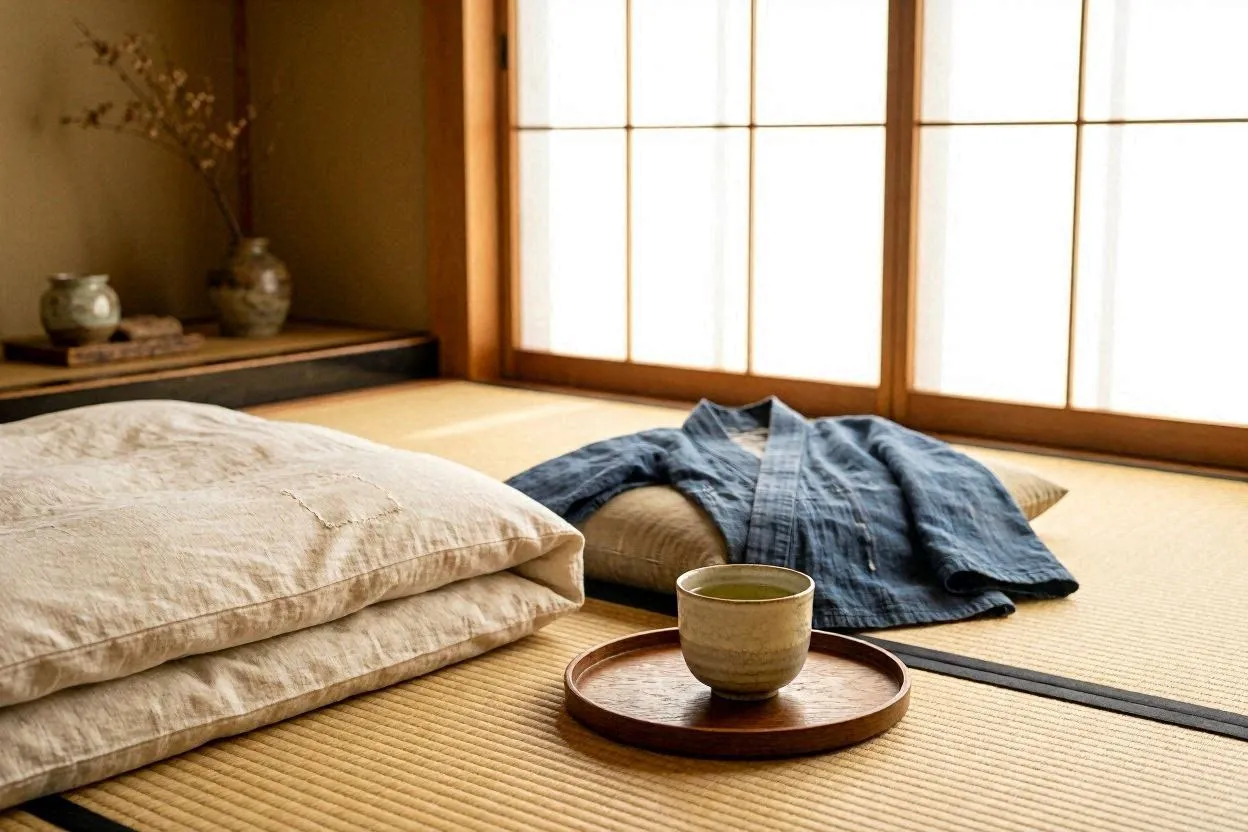
The tatami rooms, the wooden corridors, the garden visible from every angle — these are not aesthetic choices. They are the result of hundreds of years of testing what makes a human feel settled and calm. Japanese hospitality is an engineering discipline disguised as tradition.
Community without coercion
Coworking spaces often manufacture community through events: pizza nights, pitch competitions, happy hours with warm beer. The ryokan version of community is quieter and more durable. You eat together because there is one dining room. You talk in the evening because the bath is shared. You learn someone's name because you see them every morning in the same hallway. There is no forced networking. Just proximity over time, which is how genuine relationships have always formed.
The okami-san (the ryokan proprietress) knows everyone by name within a day. She remembers your preferences, adjusts your futon firmness, asks about your project at breakfast. This is not customer service in the Western sense. It is omotenashi — anticipatory hospitality — and it creates a sense of being looked after that no coworking space membership can replicate.
The real reason
We chose ryokans because they solve the problem most remote workers actually have. Not "where do I plug in my laptop?" but "how do I structure my days so that work is good and the rest of life is good too?" The ryokan answers that question without asking it. The bath, the meals, the garden, the quiet — they create a container for your day. Inside that container, work becomes one thread in a larger pattern, not the only thread.
That shift — from work as the default state to work as one rhythm among many — is the thing nobody talks about when they market coliving to remote workers. It is also the thing that keeps people coming back.