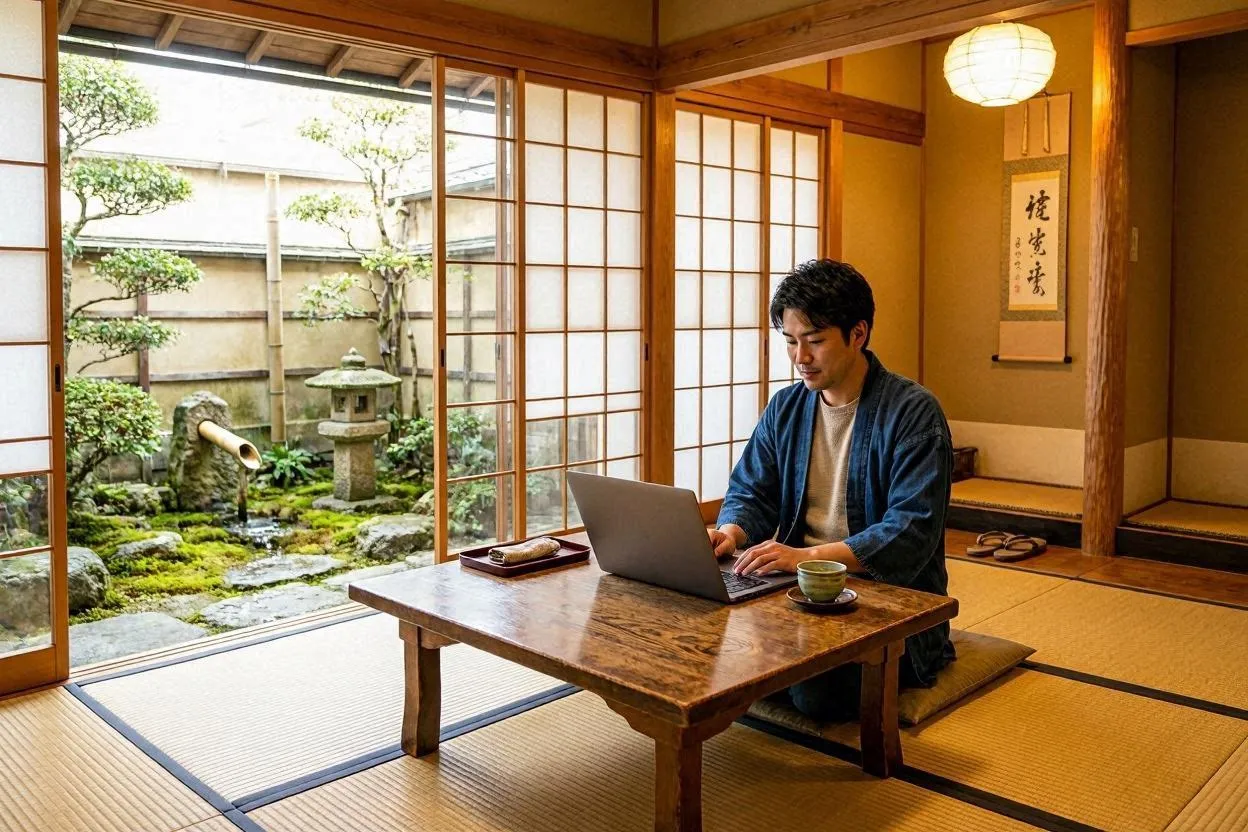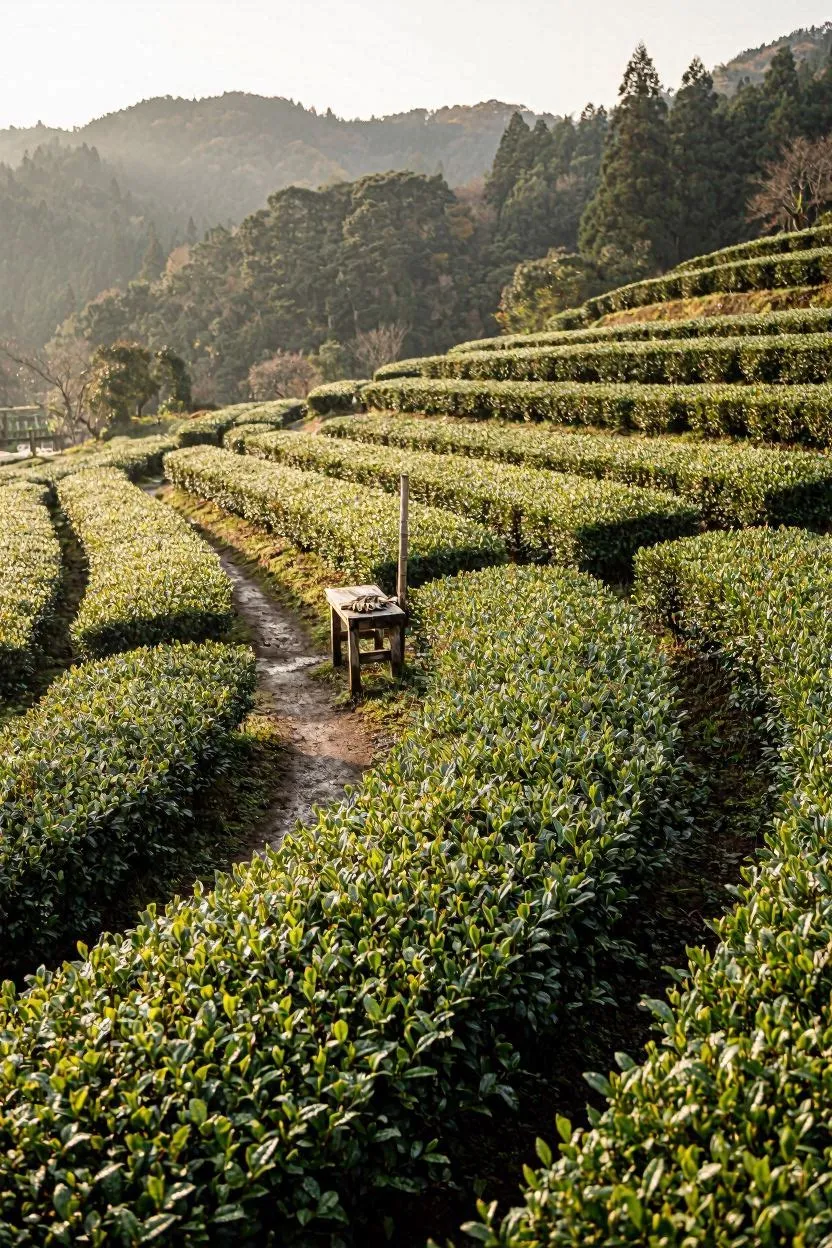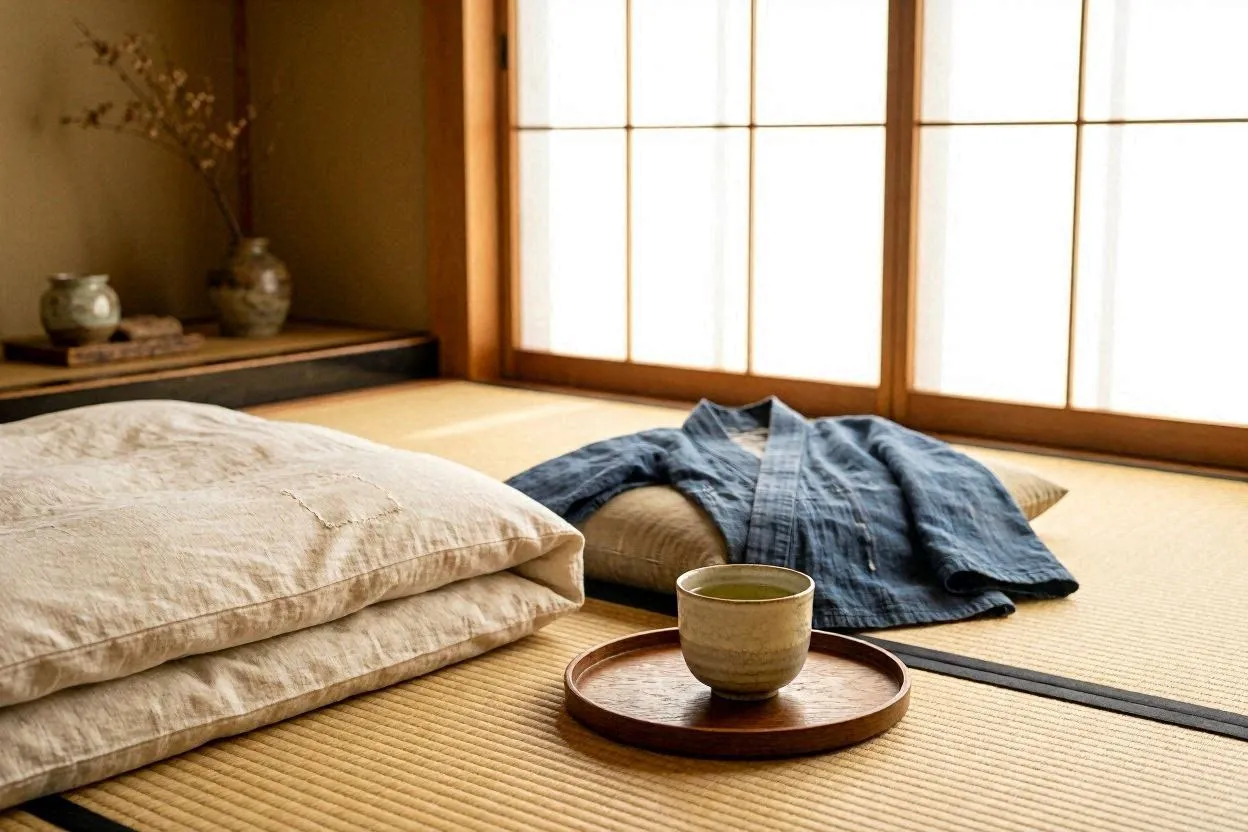
I arrived at the ryokan in November, when the maple leaves along the river had just turned. I had come to Ureshino to work remotely for a month, but if I am honest, I had also come because I was tired in a way that weekends could not fix. The kind of tired where you sleep eight hours and wake up still heavy. Where the to-do list is finished but the restlessness remains.
I did not know the word toji then. I learned it on my third day, from the okami-san, who mentioned it as casually as someone describing the weather. Toji, she said, is what people used to come here for — weeks or months of staying at an onsen to let the water and the quiet put you back together. She said it like it was the most ordinary thing in the world. Looking back, I think that was the point.
The first week: resistance
The first week was harder than I expected. Not because the ryokan was uncomfortable — it was beautiful, the Wi-Fi was fast, the food was extraordinary — but because my body did not know what to do with the silence. I kept reaching for my phone during meals. I checked Slack while walking to the bath. I felt guilty sitting in the rotenburo at 2pm on a Tuesday, even though my work was done.
The schedule at the ryokan was simple. Breakfast at eight. Bath open from six to midnight. Dinner at seven. Between those markers, the day was mine. No events. No programming. No one asking me to be anywhere. For someone who had spent a decade structuring every hour, the openness felt almost threatening.
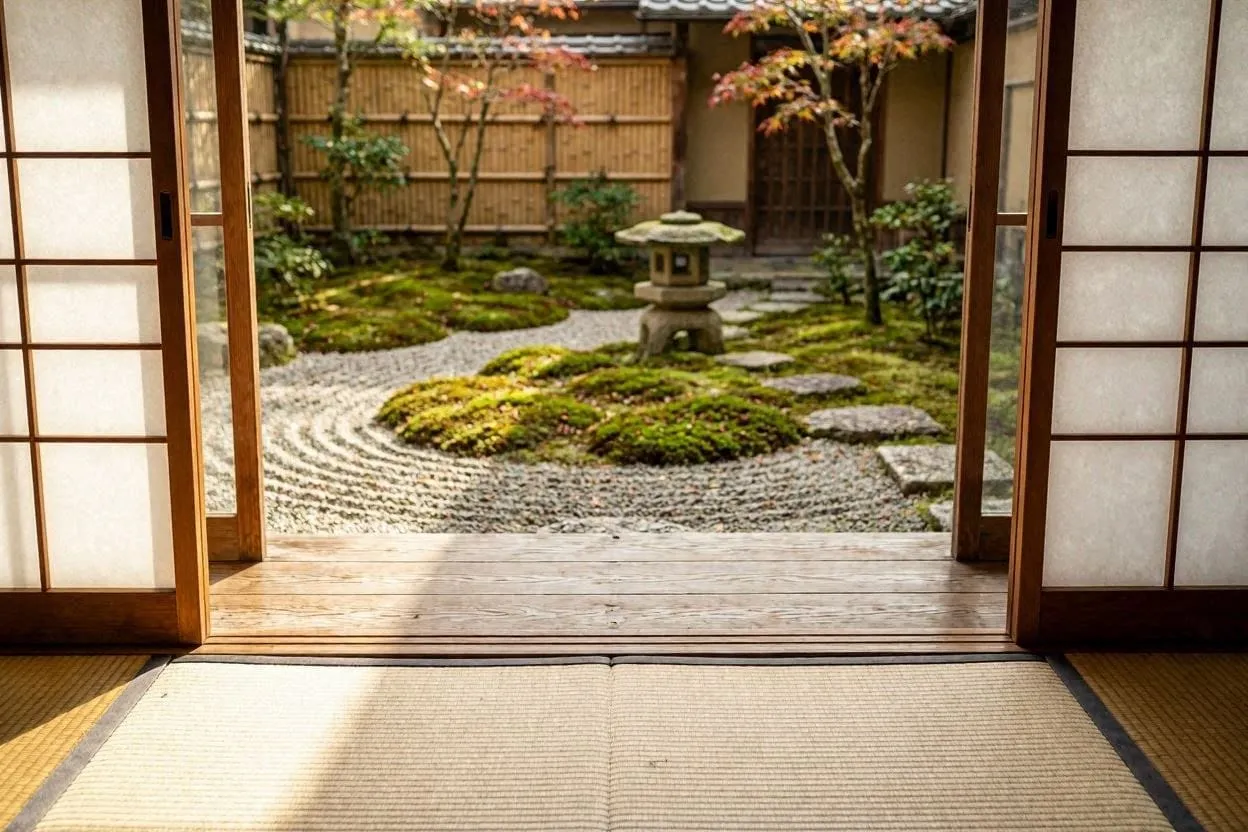
I worked in the morning, as I always do. But the quality of the silence around me was different from the silence in my apartment. In an apartment, silence is the absence of noise. At the ryokan, silence was a presence — the garden, the water, the creak of the wooden floor as someone walked to the bath. It had texture. And within a few days, it began to slow me down in ways I did not choose but could not resist.
The second week: routine
By the second week, a routine had formed on its own. I did not plan it. The ryokan shaped it through the fixed points of meals and the open invitation of the bath.
I woke early — earlier than I ever do at home — and walked to the onsen before breakfast. The bath at 6:30am was usually empty, or shared with one or two older men from town who came every morning. Nobody spoke. The mountains were visible through the steam, just outlines in the pre-dawn gray. I soaked for twenty minutes, washed, and walked back to my room with wet hair and a strange lightness.
Breakfast was the meal I looked forward to most. Grilled fish, miso soup, pickled vegetables, rice, a soft-boiled egg, nori, a small dish of natto if you wanted it. Ureshino-cha served in a ceramic pot. The meal took thirty minutes, and I ate all of it, slowly, which was new for me. At home, breakfast is coffee standing up.
"I began to notice that rest was not the absence of work. It was a different kind of activity — one that required its own time and attention, just as work does."
I worked from nine to one, at a low table in my room or at the communal desk near the lobby. The work was good — better than usual, actually. The mornings felt longer, more spacious, as if the bath and the breakfast had stretched time somehow. Problems that would take me all day in my apartment resolved by noon.
The afternoon was unstructured. I walked the town, visited the tea shops, sat by the river. I took a second bath in the late afternoon. I read. I did nothing — genuinely nothing, which is harder than it sounds for anyone who measures their worth in output.
The third week: something shifts
The change happened gradually, without announcement. I noticed it first in my body. The tension I carried in my shoulders and jaw — tension I had stopped noticing because it had been there for years — softened. I slept deeply, without the 3am waking that had become normal. My appetite returned to something that felt natural rather than stress-driven.
Then it happened in my mind. The constant background hum of anxiety — the low-frequency worry about deadlines, about money, about whether I was doing enough — went quiet. Not because I had solved anything, but because the rhythm of the days had replaced it with something else. The bath, the meals, the garden, the walk, the work, the bath again. The repetition was not monotony. It was a pulse, and my nervous system had synchronized to it.
I started to understand what toji actually means. It is not a spa treatment. It is not a vacation. It is a sustained exposure to a rhythm so steady and so old that your body remembers how to function within it. The hot springs are the center, but the healing is in the pattern: heat and rest, movement and stillness, nourishment and quiet, repeated daily until the body stops performing and starts living.
What I brought home
I left Ureshino at the end of November. The maple leaves had fallen, and the town was preparing for the colder weeks ahead. The okami-san gave me a small package of kamairi-cha at checkout, wrapped in paper with the ryokan's name.
I did not bring home a productivity system or a morning routine optimized for peak performance. What I brought home was simpler and harder to explain: a felt understanding that rest is not the absence of work. Rest is its own activity, with its own demands and its own rewards. It requires time — not a weekend, but weeks. It requires an environment that supports it — not a darkened room with a white noise machine, but a living place with meals, baths, seasons, and other people moving through the same rhythms.
"The body and mind need sustained, supported rest the way a field needs to lie fallow. Not because it is broken, but because that is how things grow."
Most of us treat rest as recovery: the thing we do after work depletes us, so we can work again. Toji taught me that rest can be generative — not preparation for the next sprint, but a state with its own value. The Japanese came to onsen towns for months, not because they were lazy, but because they understood something we have forgotten: the body and mind need sustained, supported rest the way a field needs to lie fallow. Not because it is broken, but because that is how things grow.
I make the tea she gave me on mornings when the noise starts again. It tastes like a specific room in a specific town, and for a few minutes, the rhythm returns.