Your first visit to a Japanese onsen can feel intimidating. Everything is communal, everyone is naked, and the rules — while simple — are unwritten. Most Japanese people learn onsen etiquette as children, which means nobody thinks to explain it. This guide covers everything a first-timer needs to know, with particular attention to the things that trip up remote workers on long stays.
The good news: onsen etiquette is not complicated. It is a handful of practical rules designed to keep shared water clean and the atmosphere peaceful. Follow them, and nobody will notice you are new. Break them, and everyone will.
Before you enter the water
Wash thoroughly first
This is the most important rule and the one most commonly violated by visitors. Before entering any onsen pool, you must wash your entire body at the shower stations provided. This is not a quick rinse. Use soap. Wash your hair. Scrub. The bath is for soaking, not for cleaning — the water is shared by everyone, and the expectation is that you enter it already spotless.
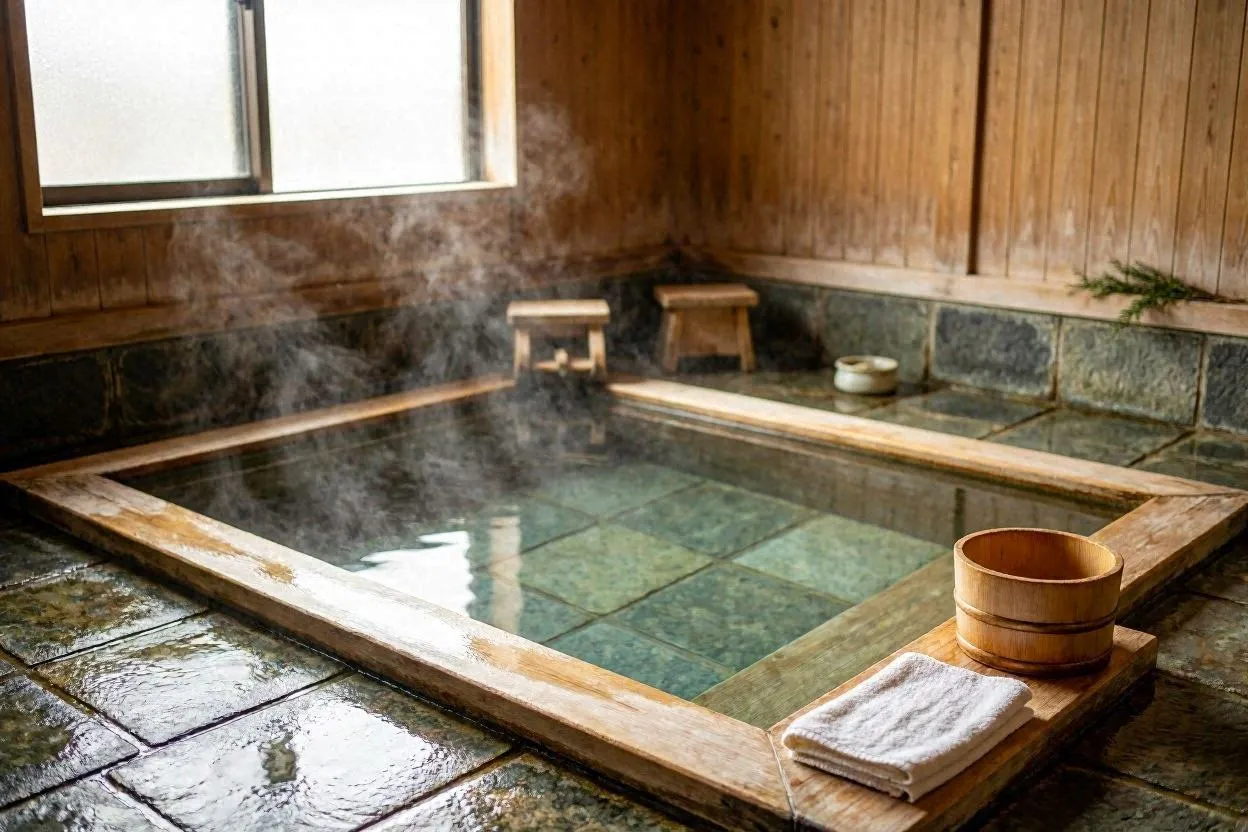
Each washing station has a stool, a handheld shower or faucet, soap, shampoo, and a small plastic basin. Sit on the stool (standing and splashing is frowned upon) and wash seated. When finished, rinse the stool and area for the next person.
Kake-yu: the preparatory rinse
Before entering the bath itself, pour hot water over your body using the wooden ladle (if provided) or the plastic basin. This is called kake-yu (掛け湯), and it serves two purposes: it acclimates your body to the water temperature (which can be 40–44°C), and it signals to other bathers that you are clean and ready to enter. Start from your feet and work upward. The thermal shock of stepping directly into very hot water without kake-yu can cause dizziness or a spike in blood pressure.
In the water
No swimsuits
Onsen are entered naked. No swimsuits, no underwear, no exceptions. This applies to both indoor baths (uchi-buro) and outdoor baths (rotenburo). The reasoning is hygienic: swimwear traps soap residue and detergent. You will be given a small towel (te-nugui) at the front desk or in your room — more on that below.
The towel rules
You carry a small hand towel with you to the bath. This towel does not go in the water. Most bathers fold it and place it on top of their head while soaking — a practice that looks quirky but is entirely practical (it keeps the towel dry and your head cool). Alternatively, place it on a rock at the edge of the bath. The large towel stays in the changing room.
"The onsen is one of the few remaining spaces in modern life where there are no screens, no status symbols, no clothing to signal who you are. Everyone enters the water the same way."
— On the Equality of the Bath
Quiet atmosphere
Onsen are not social spaces in the way a Western hot tub might be. Conversation is kept to a low murmur. No phone calls, no music, no loud laughter. Many regulars visit for the meditative quality of the silence. If you are visiting with a friend, speak quietly. If someone is soaking alone with their eyes closed, give them space.
Do not submerge your head
Keep your head above water. Submerging your head or swimming in an onsen is considered unhygienic and disruptive. The bath is for still, quiet soaking. Treat it as you would a meditation seat that happens to be filled with hot mineral water.
Tattoo policies
This is the question every foreign visitor asks, and the answer is evolving. Traditionally, tattoos were associated with yakuza (organized crime) in Japan, and most public onsen and sento (public bathhouses) banned tattooed bathers. Many still do.
However, the policy is shifting. A growing number of onsen — particularly in areas with international visitors — now permit tattoos, or offer skin-colored cover patches at the front desk. Some ryokans with private baths (kashikiri buro) sidestep the issue entirely: you reserve the bath for yourself or your group.
At Swallow Base's partner ryokans, tattoo policies are clearly communicated before booking. Several of our locations have private baths available, and we specifically partner with properties that take a welcoming approach. If you have visible tattoos, ask before your stay — we will always have an honest answer and an alternative.
Public vs private baths
Daiyokujo (large public bath): The main communal bath, separated by gender. This is the standard onsen experience and the one most worth having. Once you get past the initial awkwardness of nudity, the communal aspect becomes unremarkable within minutes.
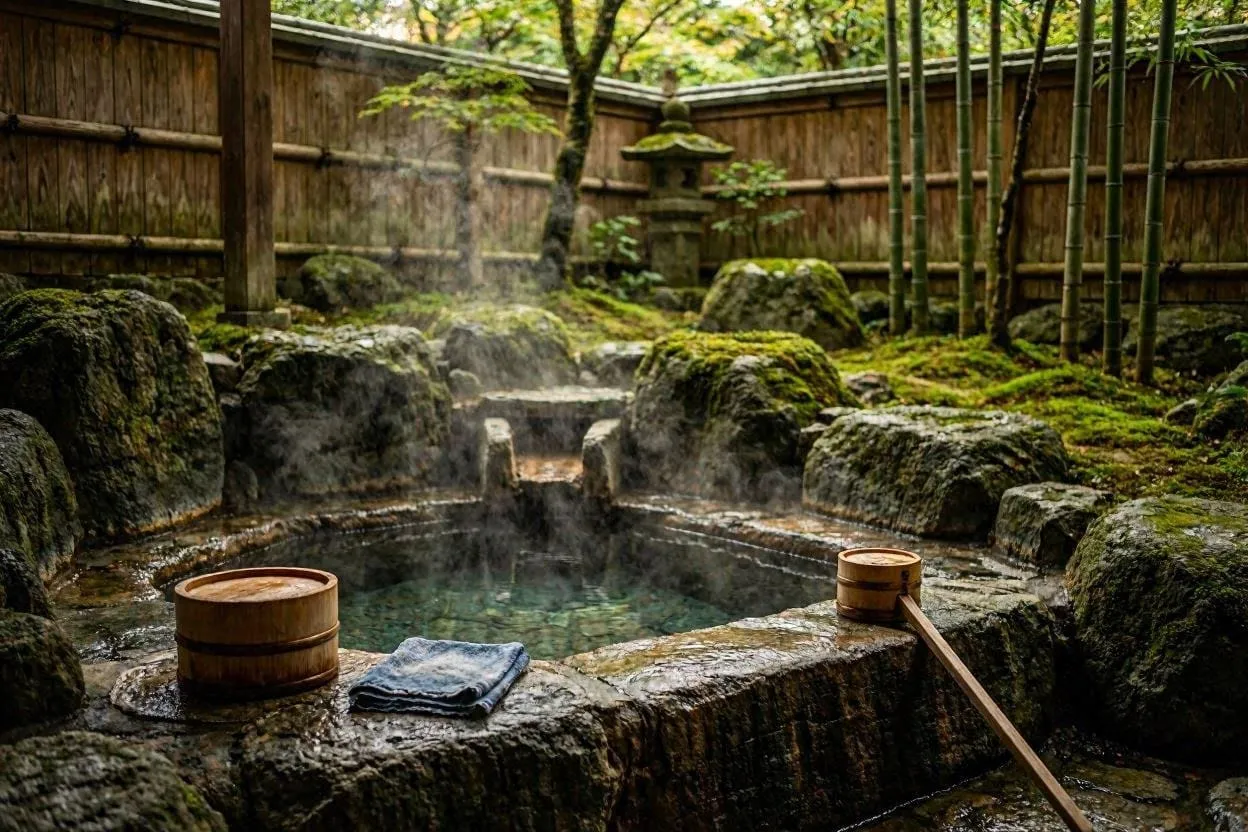
Rotenburo (outdoor bath): An open-air bath, often with a view of mountains, a garden, or a river. Rotenburo are the highlight of most onsen stays. They follow the same etiquette as indoor baths, with the added pleasure of soaking under open sky. In winter, the contrast of hot water and cold air is extraordinary.
Kashikiri buro (private reserved bath): Available at many ryokans for an additional fee or by reservation. Ideal for couples, families, or anyone uncomfortable with communal bathing. Typically reserved in 45-minute to one-hour blocks.
After the bath
Many onsen enthusiasts recommend not showering after bathing, to let the minerals remain on your skin. This is a personal choice — the mineral content of the water (sulfur, sodium bicarbonate, iron, depending on the source) is what gives each onsen its therapeutic character.
Dry off in the changing room, not in the bathing area. Wring out your small towel before returning to the changing room to avoid dripping on the floor. Most changing rooms have hair dryers, vanity mirrors, and sometimes complimentary skincare products.
After the onsen, the tradition is to rest. Many ryokans serve tea in the lobby after bathing, or you can return to your room. The post-onsen drowsiness — a warm heaviness in the limbs, a quietness in the mind — is not an accident. It is the entire point.