Traditional Crafts
工芸Pottery, calligraphy, dyeing, and papermaking — regional craft traditions taught by the artisans who carry them forward.
These crafts exist because of where they are
Japanese craft traditions are inseparable from geography. Arita became the birthplace of Japanese porcelain because a Korean potter discovered kaolin clay there in 1616. Indigo dyeing thrived in Tokushima because the Yoshino River's flood plains were ideal for growing ai (indigo plants). Washi papermaking survived in mountain villages where clean, cold water and kozo mulberry trees were abundant.
At Swallow Base, the crafts you learn are the ones native to the region you're staying in. In Saga Prefecture (where Ureshino sits), you're within 30 minutes of Arita — where porcelain has been fired continuously since the Edo period. This is not a curated "Japanese craft experience." It's the actual craft of the actual place.
Arita-yaki & Hasami-yaki
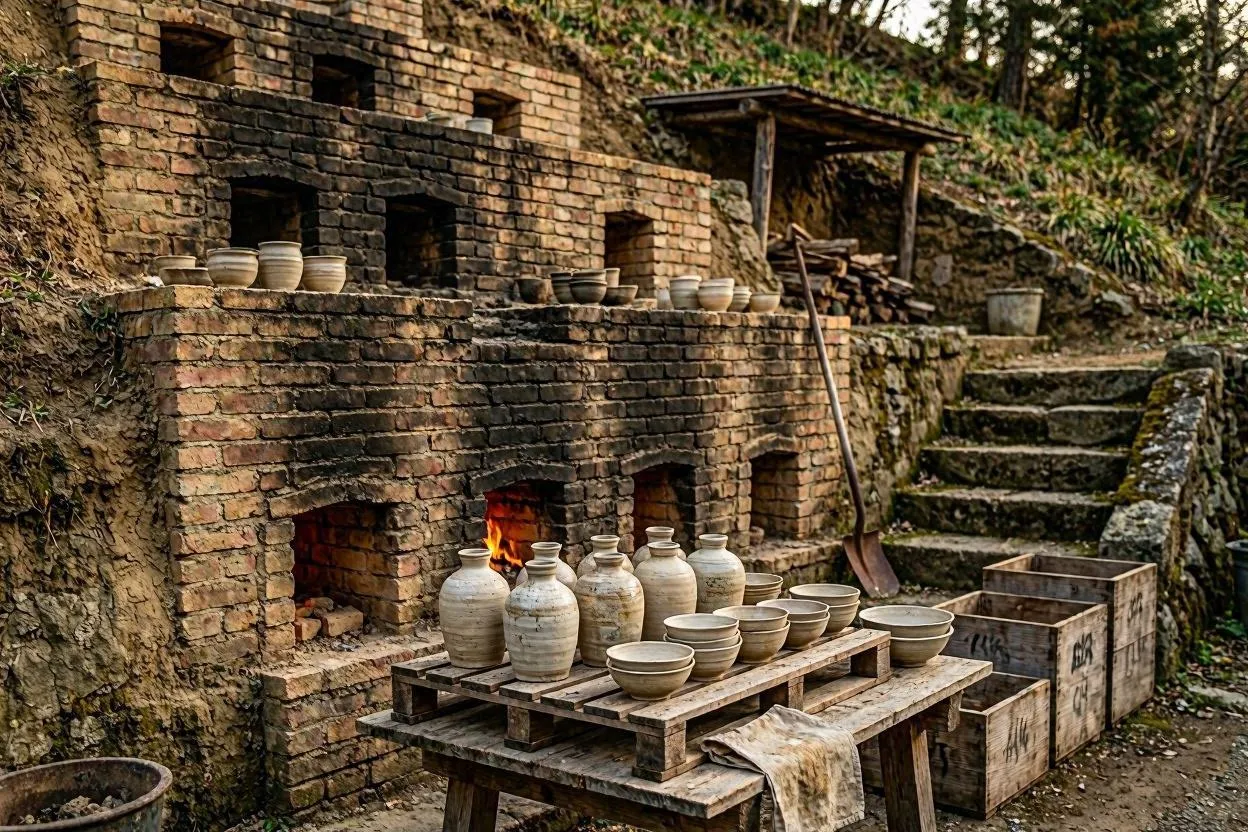
Arita-yaki (有田焼) is Japan's oldest porcelain tradition. It began in 1616 when Yi Sam-pyeong, a Korean potter brought to Japan during Toyotomi Hideyoshi's invasions, discovered high-quality kaolin clay in the Izumiyama quarry near Arita. Within decades, Arita porcelain — exported through the nearby port of Imari — was being collected by European royalty.
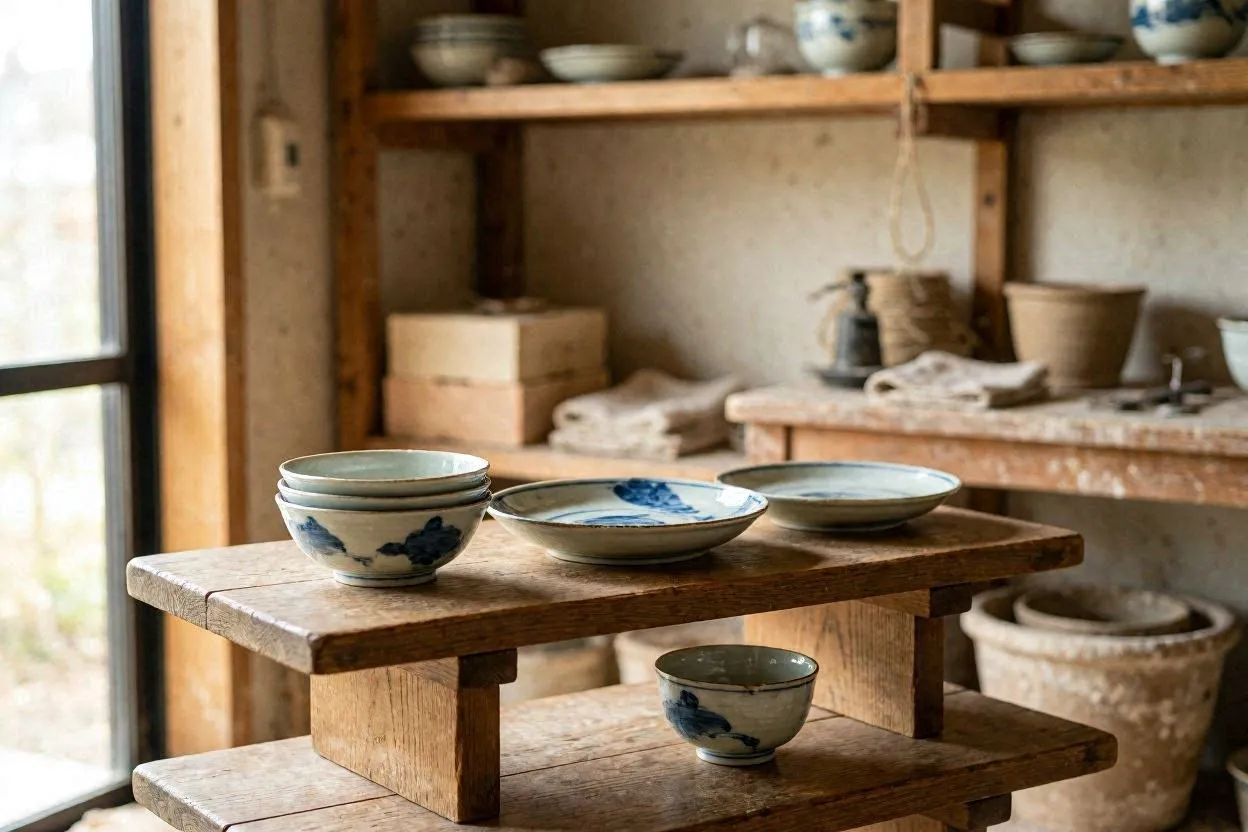
Arita-yaki is characterized by its translucent white body and refined decoration. The two main styles are sometsuke (blue and white, painted with cobalt oxide under the glaze) and iro-e (overglaze polychrome enamel, developed by Sakaida Kakiemon in the 1640s). Today, roughly 150 kilns still operate in the town of Arita.
Hasami-yaki (波佐見焼) comes from the neighboring town of Hasami in Nagasaki Prefecture, just 10 minutes from Arita. While Arita focused on fine art porcelain, Hasami specialized in everyday tableware — affordable, durable, and beautifully simple. Hasami-yaki has seen a revival among younger Japanese consumers who appreciate its clean, modern aesthetic rooted in a 400-year-old tradition.
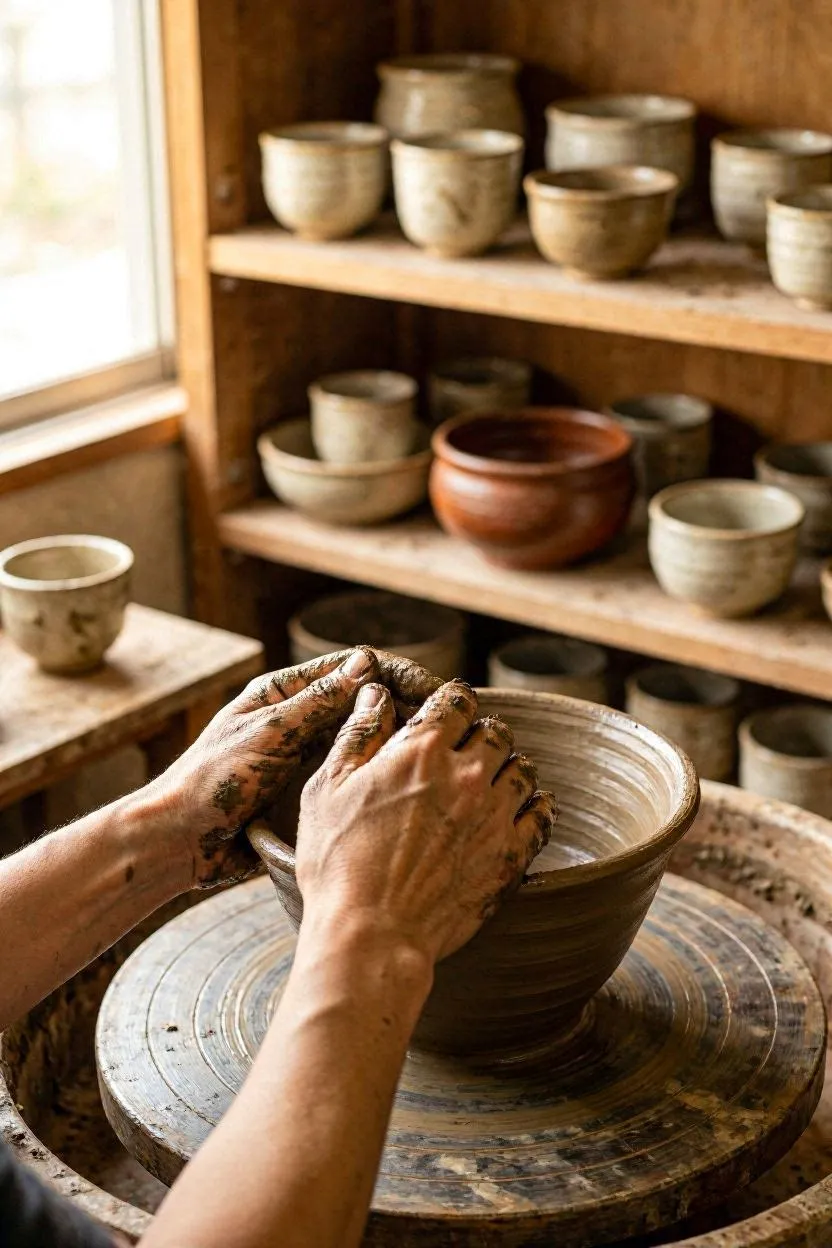
What you'll do: Wheel-throwing or hand-building sessions at a working Arita studio. Learn about clay preparation, bisque firing, glaze application, and decoration techniques. Pieces are fired and can be shipped to you after completion.
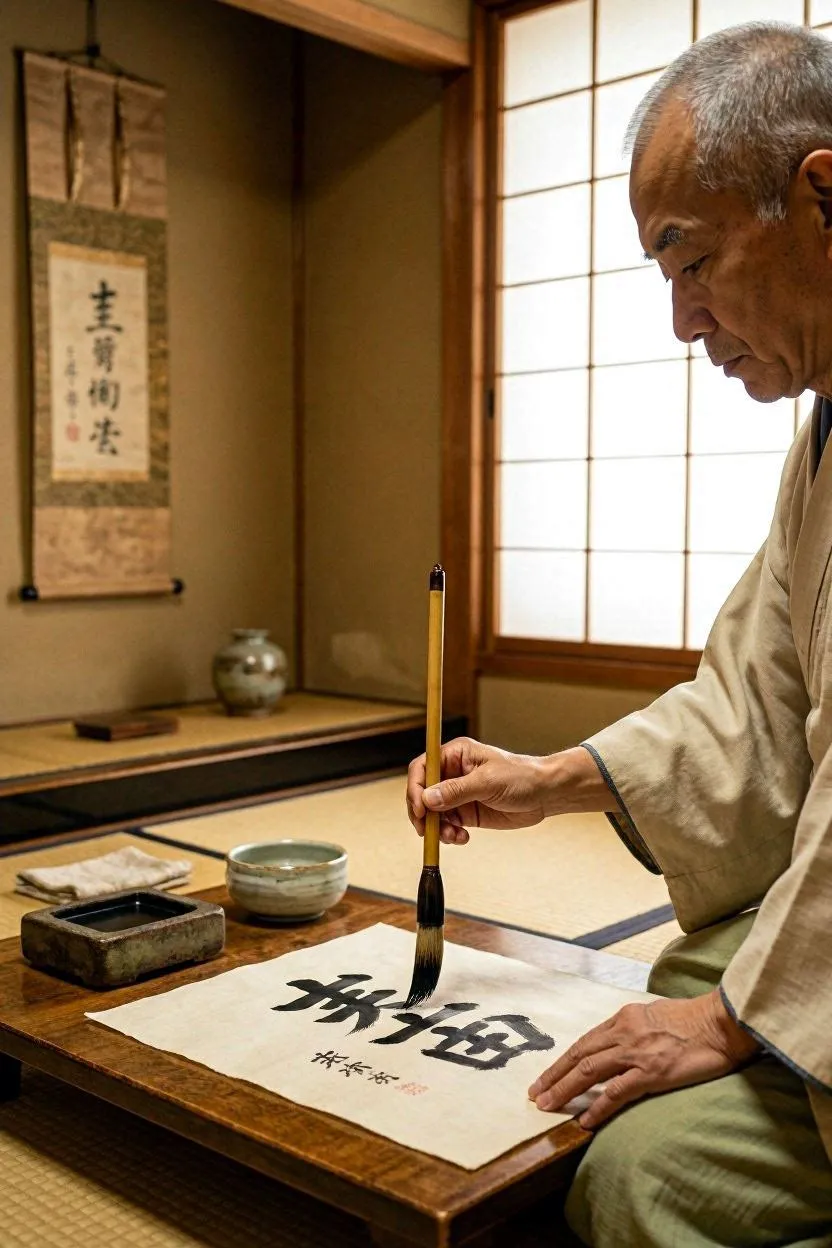
Shodo — 書道
Japanese calligraphy is practiced with four tools: the fude (brush, typically made from goat, horse, or weasel hair), sumi (ink stick, made from pine soot and animal glue), suzuri (ink stone, for grinding the sumi with water), and hanshi (paper). These are collectively called the Four Treasures of the Study (文房四宝).
The act of grinding ink is itself a meditative preparation — it takes several minutes of slow, circular motion on the stone, during which the calligrapher settles into focus. The viscosity of the ink changes with the amount of water and time spent grinding, affecting every stroke that follows.
Shodo is not penmanship. Each character is a composition — the thickness, speed, angle, and pressure of each stroke express the calligrapher's state of mind. A character written quickly with confidence looks fundamentally different from one traced carefully. Japanese calligraphy values ki (energy) flowing through the brush.
What you'll do: Learn basic strokes and radicals. Practice kanji with guidance on brush angle, pressure, and rhythm. Work toward writing a single character or short phrase that you're satisfied with — which often takes longer than you'd expect.
Aizome & Shibori
Aizome (藍染め) is the art of dyeing with natural indigo — fermented from the leaves of the Persicaria tinctoria plant. The deep blue produced by Japanese indigo was so ubiquitous during the Edo period that visiting Europeans called it "Japan Blue." The dye has natural antibacterial and insect-repellent properties, which made it practical as well as beautiful.
Shibori (絞り) refers to resist-dyeing techniques — binding, folding, twisting, or clamping fabric before immersion to create patterns. Techniques include kanoko (bound dots), arashi (pole-wrapping that creates diagonal streaks), itajime (clamping between wooden blocks), and kumo (pleated and bound to create spider-web patterns). Each piece is unique.
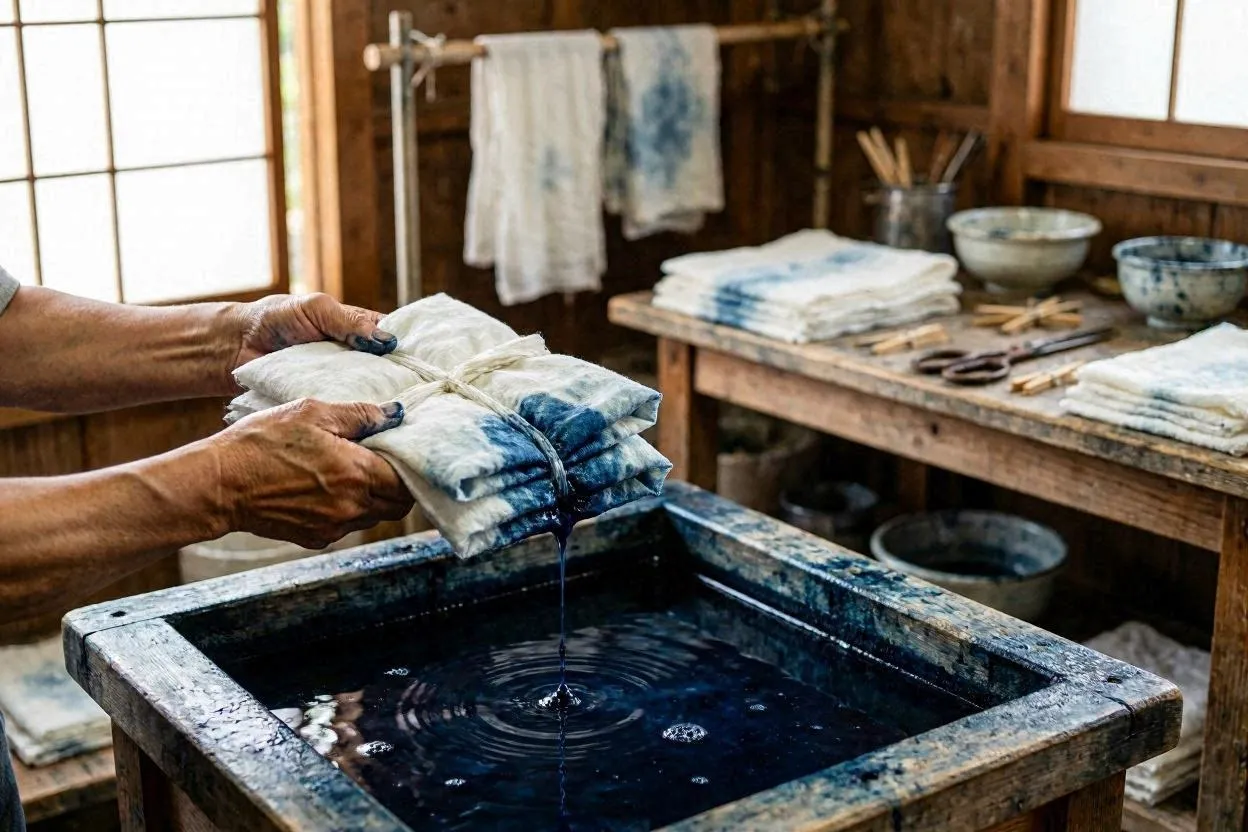
What you'll do: Prepare fabric using shibori techniques, then dip into an indigo vat. Multiple dips deepen the color — a single dip produces pale sky blue; twenty or more create the near-black nou-kon that defines traditional Japanese workwear.
Washi — 和紙
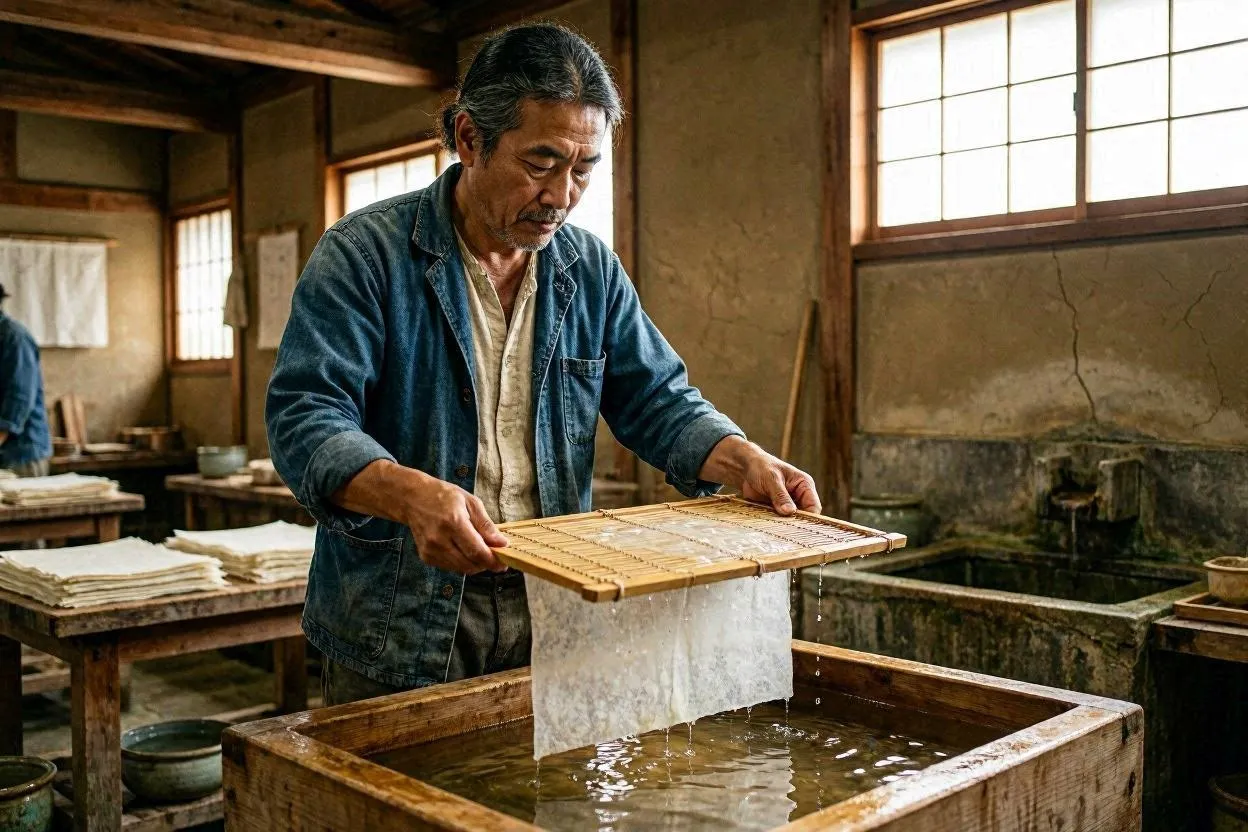
Washi (和紙) — Japanese handmade paper — was added to UNESCO's Intangible Cultural Heritage list in 2014. Unlike Western paper made from wood pulp, washi is made from the inner bark of three plants: kozo (paper mulberry, the strongest), mitsumata (a fine, silky fiber), and gampi (which produces a lustrous, translucent sheet).
The process is labor-intensive: bark is stripped, boiled with ash lye to break down non-fiber material, beaten by hand, then suspended in water with neri (a viscous substance from tororo-aoi root that prevents fibers from clumping). The papermaker then uses a bamboo screen (su) to scoop and shake the fiber suspension — a technique called nagashizuki that produces washi's characteristic long, interlocking fibers and remarkable strength.
What you'll do: Learn the nagashizuki scooping technique. Make sheets of washi that can incorporate natural elements — pressed flowers, leaves, colored fibers. Understand why a single sheet of handmade washi can last over 1,000 years while mass-produced paper disintegrates within decades.
How sessions work
Location: Sessions are held at artisan workshops near each Swallow Base location. Pottery sessions take place in Arita or Hasami (30 minutes from Ureshino). Calligraphy and dyeing sessions are held at the ryokan or nearby studios.
Duration: Half-day (3-4 hours) for pottery and dyeing workshops. 90 minutes for calligraphy. Multi-session courses available for guests on extended stays.
Materials: All tools and materials are provided. For pottery, firing and shipping of completed pieces is included.
No experience needed: Every session begins with fundamentals. Experienced practitioners can work at their own level with guidance from the instructor.
Explore all Academy programs
Traditional Crafts is one of five learning paths at Swallow Base. Each is rooted in its region and led by local practitioners.