Tea Culture
茶道From leaf to cup — the philosophy and practice of Japanese tea ceremony, rooted in Ureshino's 500-year history of tea cultivation.
Chado is not about drinking tea
The Japanese tea ceremony — known as chado (茶道, "the way of tea") or sado — is a choreographed practice of preparing and serving matcha. It was codified by Sen no Rikyu in the 16th century, drawing from Zen Buddhist principles that had infused tea culture since Eisai brought tea seeds from China in 1191.
Every movement is deliberate. The angle at which you hold the chawan (tea bowl), the number of turns before drinking, the placement of utensils on the tatami — each gesture carries meaning refined over centuries. Rikyu distilled the practice into four principles: wa (harmony), kei (respect), sei (purity), and jaku (tranquility).
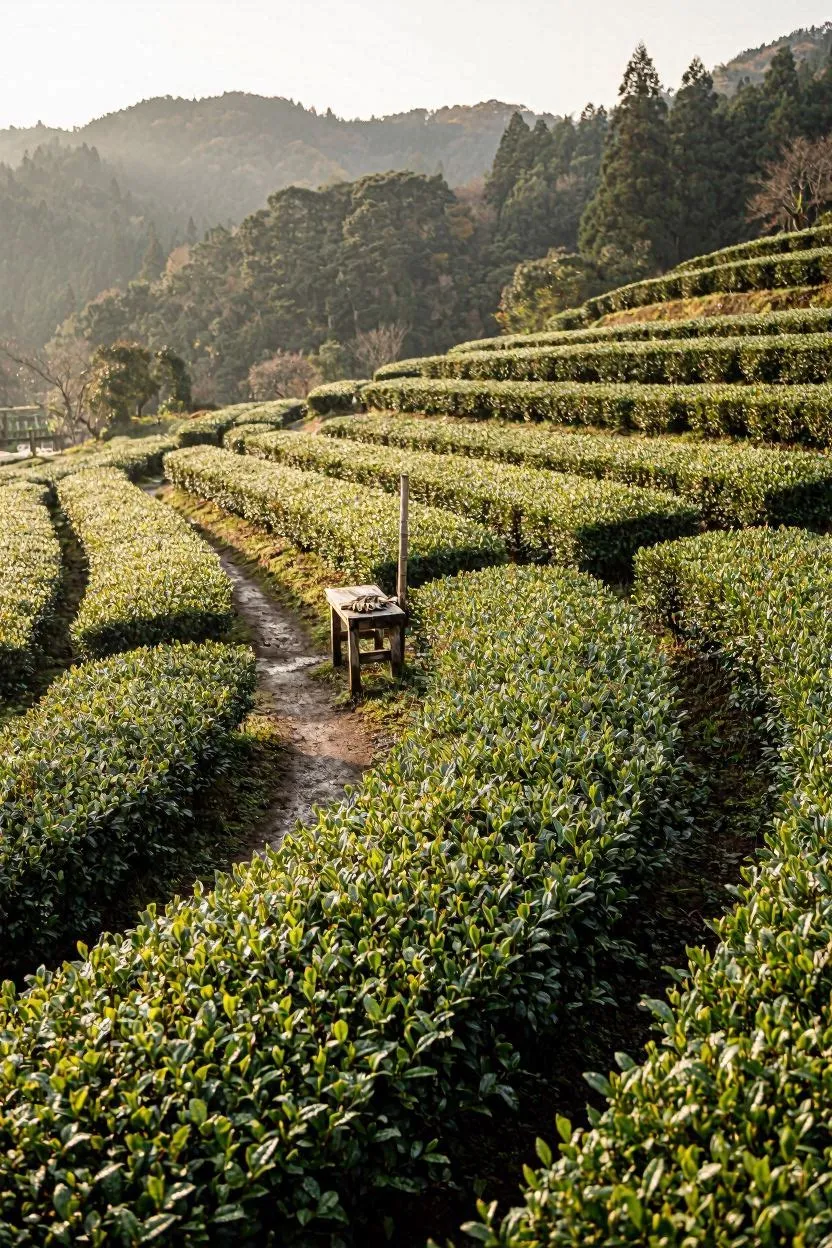
At Swallow Base, you learn chado not in a studio in Tokyo, but in the region where the leaves grow. Ureshino's tea fields surround you — and the connection between cultivation and ceremony becomes tangible.
Pan-fired tea from the 15th century
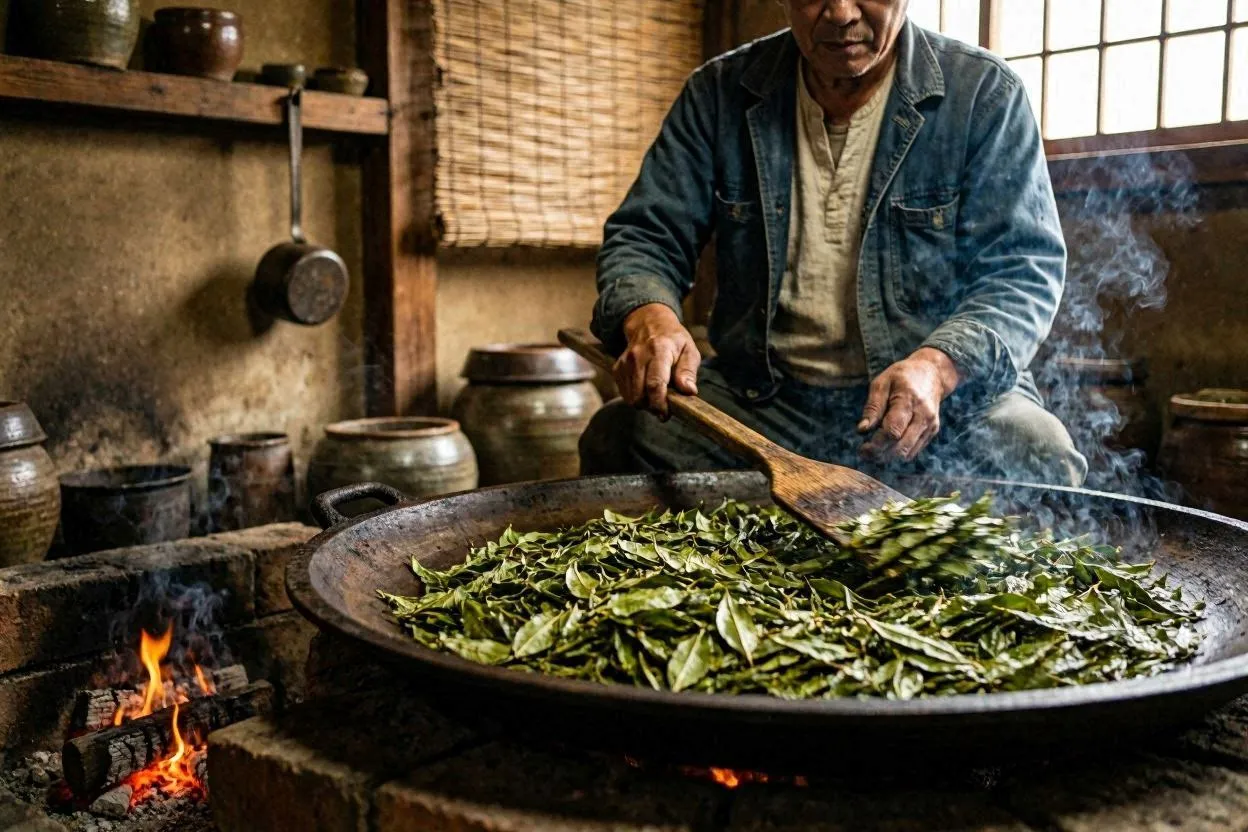
Ureshino has been producing tea since the 1440s, when Chinese-style pan-firing (kamairi) was brought to the region. While most Japanese tea today is steamed (the method that produces the vivid green sencha you see everywhere), Ureshino's signature kamairi-cha is roasted in an iron pan — producing a lighter, more golden infusion with a distinctive roasted aroma.
Kamairi-cha accounts for less than 5% of Japan's total tea production today, making it genuinely rare. The technique survived in Ureshino because of the region's long relationship with Chinese tea culture through the nearby port of Nagasaki.
Ureshino also produces tamaryokucha (curled green tea), which has a milder, slightly sweet taste distinct from the sharp vegetal notes of Shizuoka or Uji sencha. The mineral-rich volcanic soil and humid climate of Saga Prefecture give Ureshino-cha its character.
What you'll learn
Tea Preparation
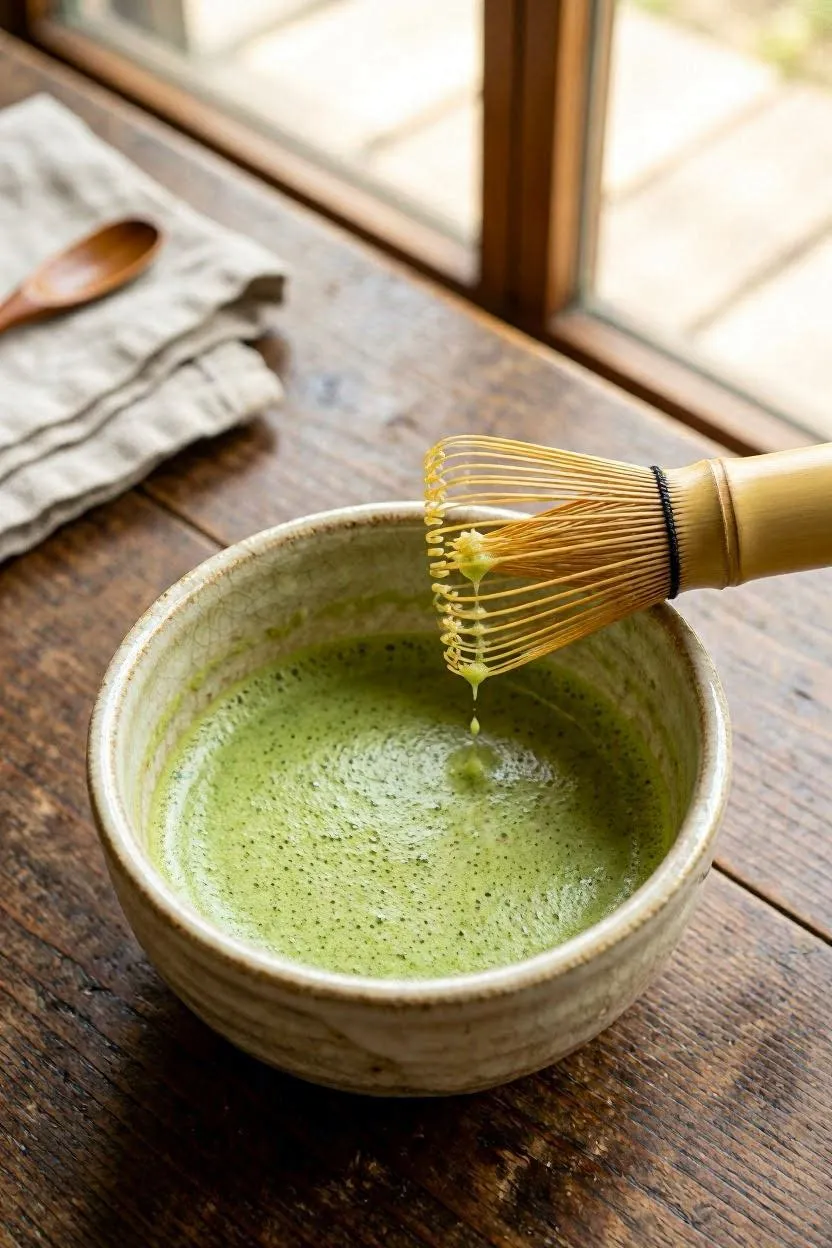
Matcha (薄茶 & 濃茶): Preparing both thin tea (usucha) and thick tea (koicha). Sifting the powder, heating the water to 80°C, whisking with the chasen in a W-motion until a fine foam forms. Koicha uses roughly three times the matcha of usucha and is kneaded rather than whisked — a technique reserved for higher-grade matcha.
Sencha & Kamairi-cha: Leaf selection, water temperature control (70°C for gyokuro, 80°C for sencha, 90°C for kamairi-cha), steeping times, and the art of multiple infusions. Each steeping extracts different compounds — the first pour is rich in amino acids (umami), while later pours release more catechins (astringency).
Wagashi Selection
Seasonal sweets (主菓子): Wagashi are selected to complement the tea and reflect the season — sakura mochi in spring, kuri kinton (chestnut paste) in autumn, snow-white jouyo manju in winter. The host chooses wagashi that create a visual and flavor counterpoint to the bitterness of matcha.
Naming and meaning: Each wagashi carries a poetic name (菓銘, kamei) that evokes a seasonal image — "first frost," "autumn moon," "scattered cherry blossoms." Understanding these names is part of appreciating the host's intention.
The Four Principles
和 Wa (Harmony): Between host and guest, between the utensils and the season, between the person and the room. Nothing should feel forced or out of place.
敬 Kei (Respect): Expressed through every gesture — bowing before entering the tea room, rotating the bowl to avoid drinking from its front, admiring the host's choices.
清 Sei (Purity): Both physical and spiritual. The ritual cleansing of utensils before each guest is not about hygiene — it's about preparing a clean space for the encounter.
寂 Jaku (Tranquility): The stillness that emerges when the other three are in place. Not imposed silence, but the quiet that arrives naturally.
Tea Schools & History
Urasenke & Omotesenke: The two largest schools of tea ceremony, both descended from Sen no Rikyu's grandsons. Urasenke (裏千家) emphasizes a frothy, well-whisked matcha and is the most widely practiced school globally. Omotesenke (表千家) prefers less foam and a more restrained aesthetic. Our sessions draw from Urasenke tradition.
Wabi-cha: Rikyu's revolution was stripping away the Chinese luxury aesthetic that had dominated earlier tea culture, replacing gold-leaf tea rooms with rustic huts and choosing humble, imperfect ceramics over perfect Chinese porcelain. This wabi-cha ("rustic tea") remains the philosophical foundation of chado.
How sessions work
Location: Ureshino, Saga Prefecture. Sessions held in a tatami tea room at the ryokan or at a nearby tea farm.
Duration: 90-minute sessions for introductory practice. Extended multi-day courses available for guests on longer stays.
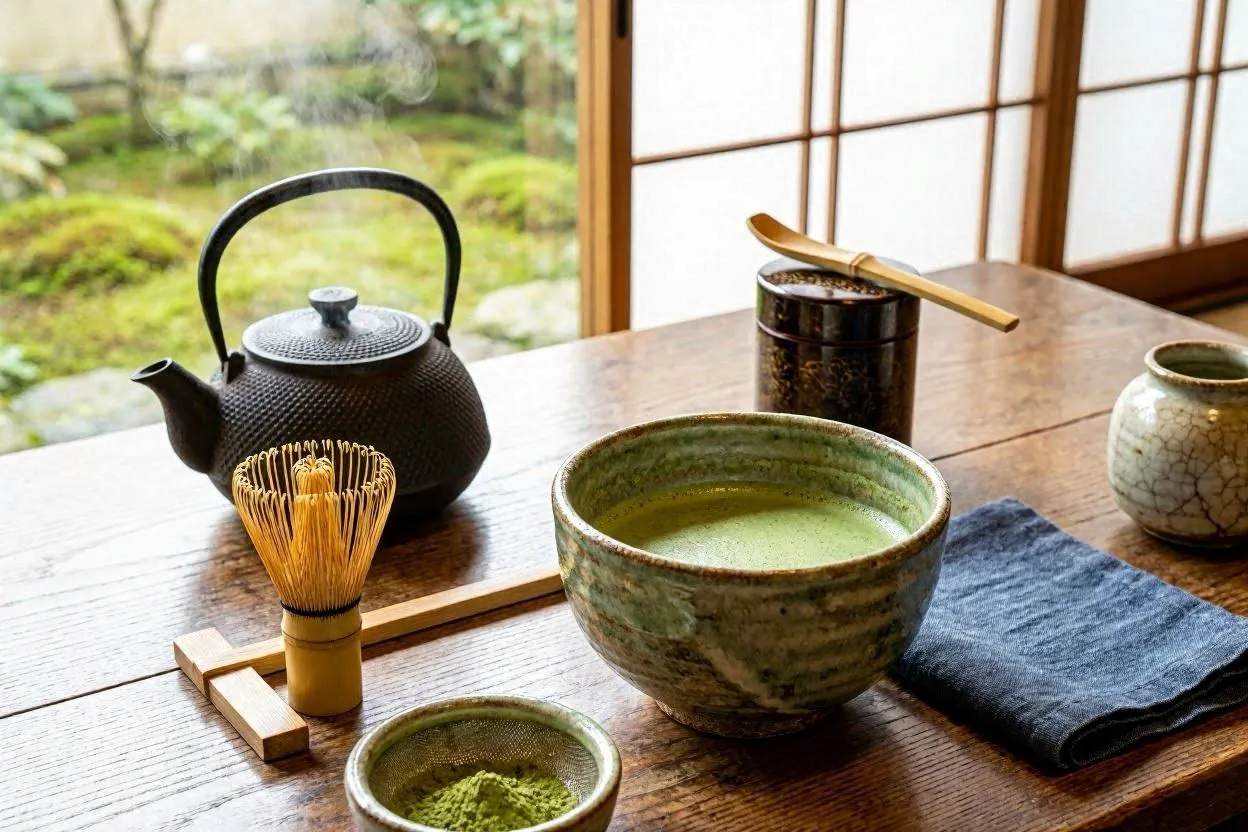
What's included: All materials (matcha, sencha, chasen, chawan), seasonal wagashi, and guidance from a local tea practitioner.
No experience needed: Sessions are structured for beginners. Guests with prior experience can join advanced temae (点前) practice covering specific procedures.
Explore all Academy programs
Tea Culture is one of five learning paths at Swallow Base. Each is rooted in its region and led by local practitioners.