Sake Brewing
酒造From rice grain to glass — the science, craft, and culture of Japan's national drink, explored through Kyushu's rich brewing heritage.
Sake is not just a drink
Sake (日本酒, nihonshu) is Japan's most culturally significant beverage — offered at Shinto shrines, poured at weddings, and shared at every celebration. Yet most visitors to Japan drink sake without understanding the extraordinary process behind it. A single bottle requires rice polished to its starchy core, steamed, inoculated with koji mold, fermented in parallel stages over weeks, and pressed through cloth — a process more complex than winemaking or beer brewing.
At Swallow Base in Ureshino, you are in the heart of Kyushu — a region famous not only for sake but for shochu (焼酎), Japan's indigenous distilled spirit. While sake dominates the national conversation, shochu outsells sake in Kyushu and carries its own centuries-old craft tradition. This program covers both.
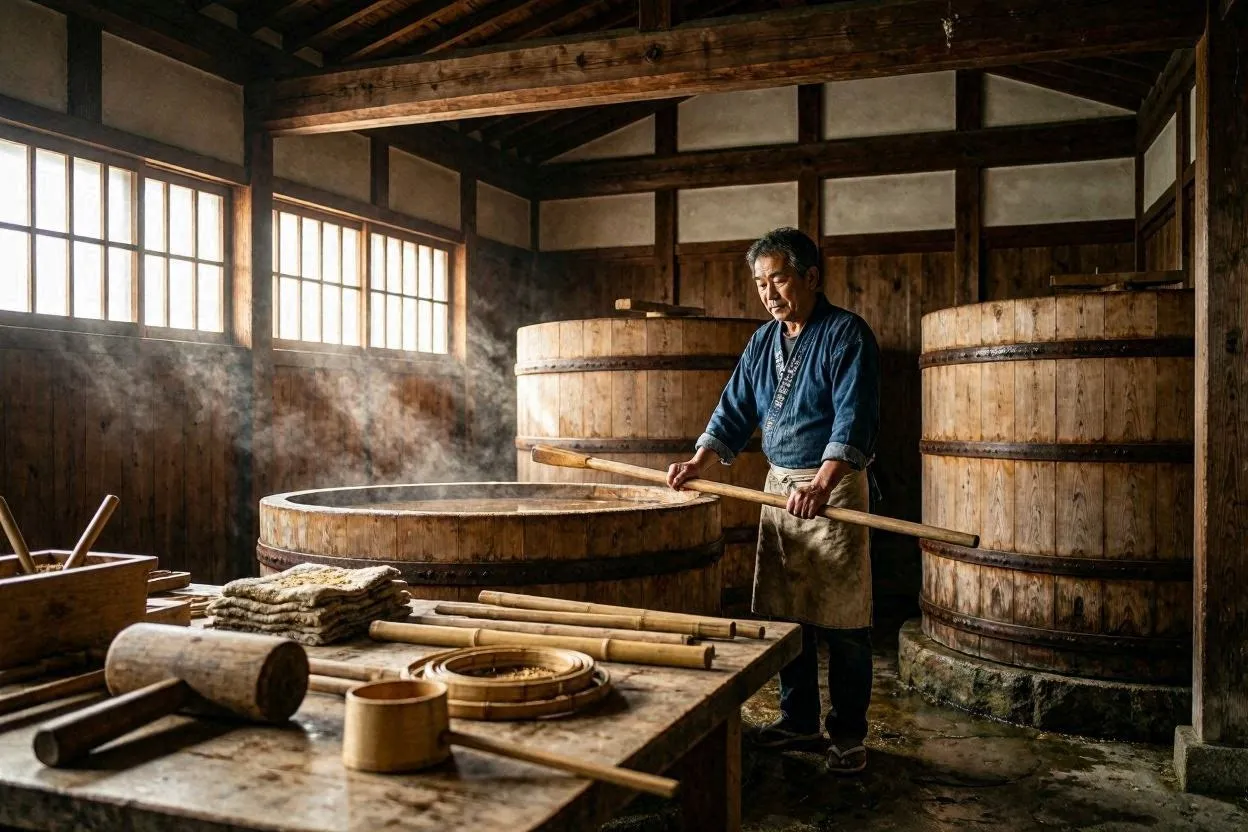
Sessions are held at local breweries (kura) where toji — master brewers — have maintained their craft through generations. You will not just taste the results. You will understand why the same rice, water, and koji produce entirely different drinks depending on who makes them and where.
The art of rice wine
Sake production begins with rice polishing (精米, seimai). The outer layers of each grain contain fats, proteins, and minerals that produce off-flavors during fermentation. The more you polish away, the cleaner and more refined the sake becomes. A table rice retains about 90% of its original size. Junmai ginjo sake uses rice polished to 60% or less. Daiginjo — the pinnacle — uses rice polished to 50% or below, meaning half of every grain is literally dust.
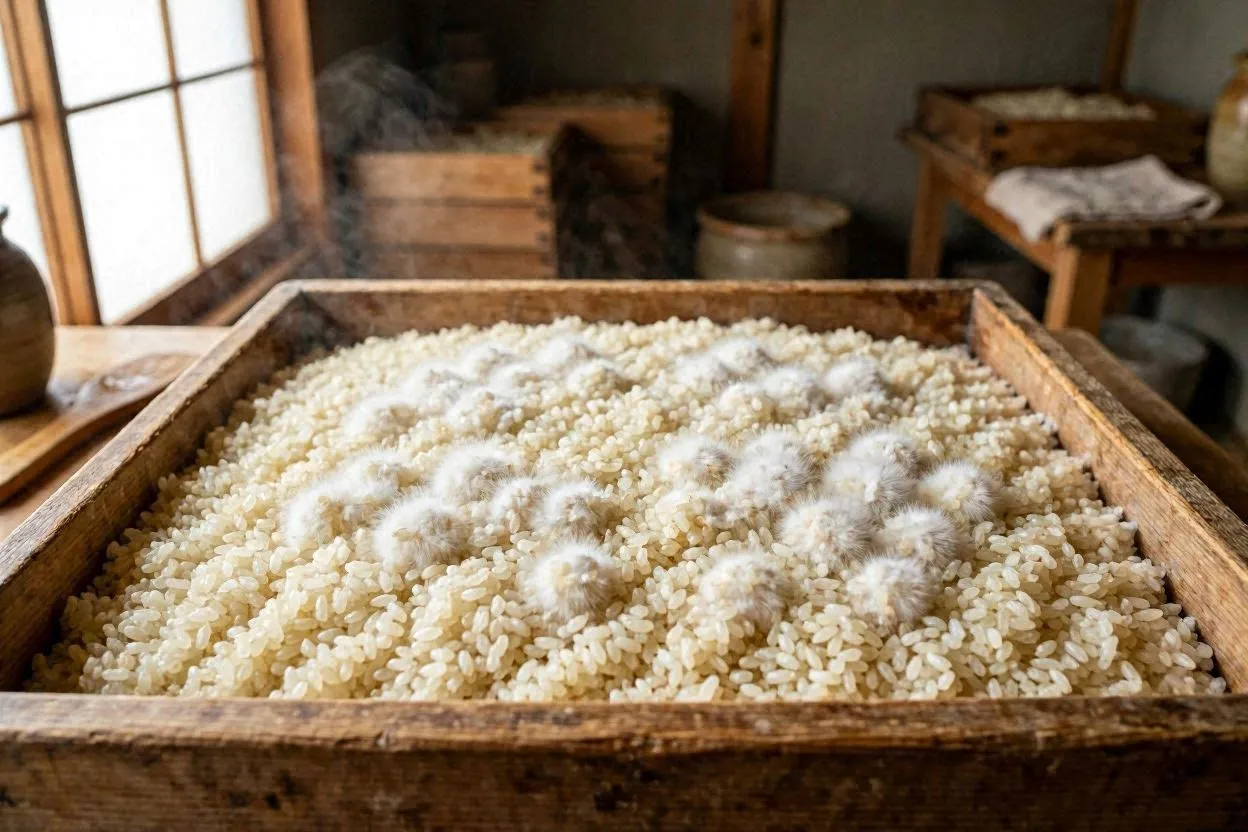
Koji (麹) — the same Aspergillus oryzae mold used in miso and soy sauce — is sprinkled onto steamed rice and cultivated in a warm, humid room (koji-muro) for about 48 hours. The koji converts rice starch into fermentable sugars. This step is so critical that toji sleep in the koji room during cultivation, checking temperature and moisture every few hours.
What makes sake unique among fermented beverages is multiple parallel fermentation (並行複発酵). In beer, starches are converted to sugars first (mashing), then yeast ferments those sugars into alcohol (separate steps). In sake, koji converts starch to sugar while yeast simultaneously converts sugar to alcohol — in the same tank, at the same time. This produces the highest natural alcohol content of any fermented beverage: 18–20% before dilution.
Kyushu's spirit
While sake is brewed (fermented), shochu is distilled — making it Japan's answer to whisky, vodka, or grappa. But unlike those spirits, shochu retains the character of its base ingredient. Imo-jochu (芋焼酎, sweet potato shochu) tastes fundamentally different from mugi-jochu (麦焼酎, barley shochu), which differs again from kome-jochu (米焼酎, rice shochu).
Saga Prefecture — where Ureshino sits — is known for kome-jochu, using the same high-quality rice that grows in the region's paddies. The Kyushu tradition of single distillation (本格焼酎, honkaku shochu) preserves the raw material's character, unlike the multiple distillations used in vodka that strip flavor away. The result is a spirit with terroir — you can taste where it comes from.
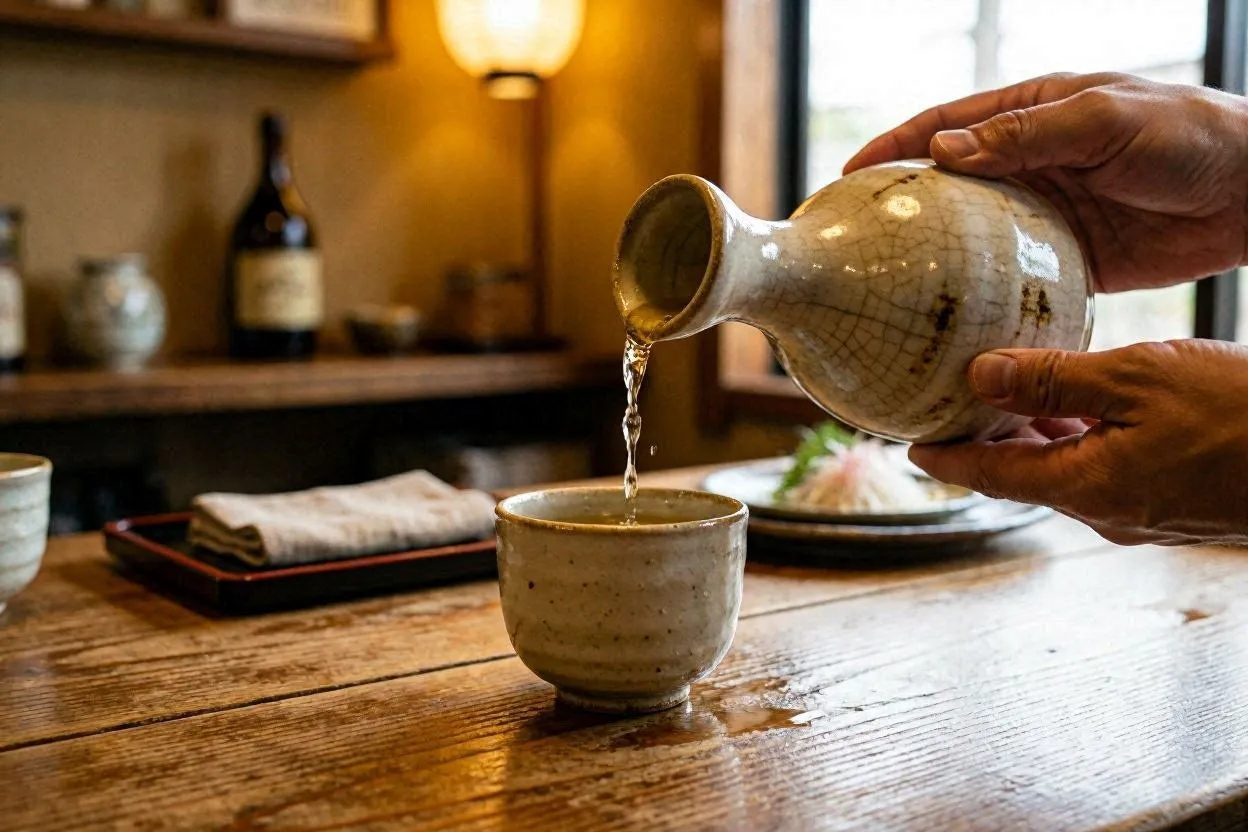
Shochu is typically enjoyed diluted with hot water (お湯割り, oyuwari) — a practice that releases aromatic compounds and makes it gentler on the palate. In Kyushu, this is how evenings end: a ceramic cup of warm shochu, a small plate of pickles, and conversation that runs late.
What you'll learn
Rice & Water
Rice varieties: Understanding sake-specific rice (酒米, sakamai) — varieties like Yamada Nishiki, Gohyakumangoku, and Omachi bred for large, starchy cores. How grain size, protein content, and growing conditions affect the final sake.
Water quality: Sake is 80% water. The mineral content of brewing water (仕込み水, shikomi-mizu) determines sake style — hard water produces dry, crisp sake (like Nada's miyamizu), while soft water creates gentler, sweeter profiles (like Fushimi). You'll taste the difference side by side.
Koji & Fermentation
Koji cultivation: Hands-on experience spreading koji spores onto steamed rice and monitoring the 48-hour cultivation. Understanding how temperature and humidity control determine whether koji produces primarily sugars (for clean sake) or amino acids (for richer, more umami-forward styles).
Fermentation stages: The three-stage addition process (三段仕込み, sandan-jikomi): hatsuzoe, nakazoe, and tomezoe — each addition of steamed rice, koji, and water builds the mash (moromi) gradually, allowing the yeast to adapt without being overwhelmed. This process takes approximately 20–30 days.
Distillation (Shochu)
Single vs. multiple distillation: Honkaku shochu (本格焼酎) uses a single distillation in a pot still (単式蒸留), preserving the flavor compounds from the base ingredient. Contrast with korui shochu (甲類焼酎), which uses continuous distillation for a neutral spirit — and why Kyushu's toji consider the former an art and the latter industrial.
Base ingredients: Sweet potato (imo), barley (mugi), rice (kome), buckwheat (soba), and brown sugar (kokuto) — each produces a distinct spirit. Tasting flights that trace the raw material through fermentation and distillation to the finished glass.
Tasting & Pairing
Sake categories: Navigating the classification system: junmai (pure rice) vs. non-junmai (with added alcohol), and the polishing tiers — junmai, junmai ginjo, junmai daiginjo. How to read a sake label (裏ラベル) and what SMV (日本酒度), acidity, and amino acid levels tell you about the taste.
Food pairing: Sake and shochu pairing with regional cuisine — Ureshino tofu with junmai, grilled Saga beef with aged koshu, fresh seafood with dry ginjo. The principle of matching weight and texture rather than just flavor.
How sessions work
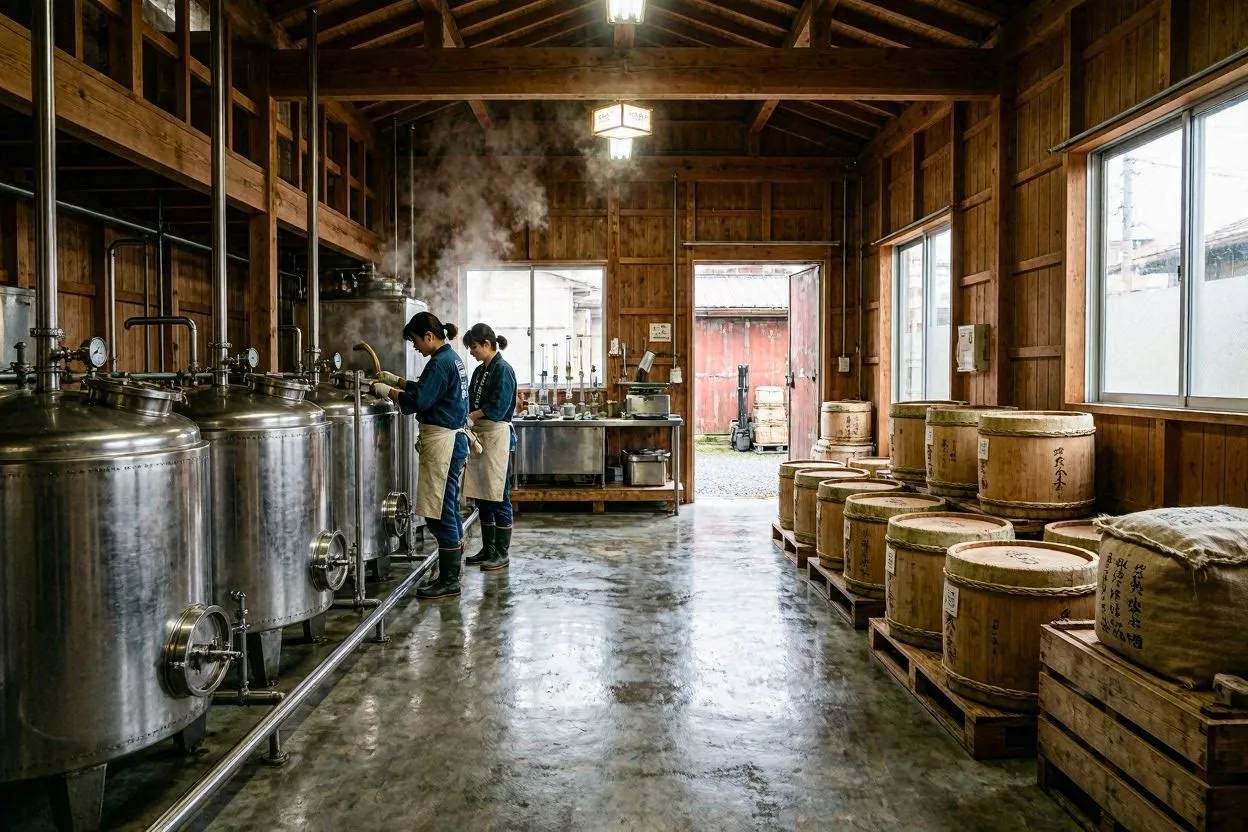
Location: Local sake breweries and shochu distilleries near Ureshino, Saga Prefecture. Some sessions held at the ryokan for tasting and theory components.
Duration: 3-hour immersive sessions combining brewery visits with hands-on experience. Multi-day courses available for guests on extended stays, timed to coincide with active brewing periods (October–March is peak season).
What's included: Brewery access, all tasting samples, materials for hands-on koji cultivation, and guidance from a local toji or brewery staff. You keep any koji you cultivate.
No experience needed: Sessions are designed for curious beginners. No prior knowledge of brewing or Japanese spirits required. Guests with existing knowledge can join advanced sessions focused on specific techniques or regional variations.
Explore all Academy programs
Sake Brewing & Distillation is one of six learning paths at Swallow Base. Each is rooted in its region and led by local practitioners.