Zen & Meditation
禅Stillness as practice. Guided zazen at local temples, morning sits at the ryokan, and the discipline of doing nothing — properly.
Zazen is not relaxation
Zazen (座禅, "seated meditation") is the central practice of Zen Buddhism. It arrived in Japan from China in the 12th and 13th centuries through monks like Eisai (who founded Rinzai Zen) and Dogen (who founded Soto Zen). Unlike guided meditation apps that promise calm, zazen asks you to sit with whatever arises — boredom, restlessness, pain — without chasing or avoiding any of it.
The instruction is deceptively simple: sit upright, breathe naturally, let thoughts come and go. But sustaining this for 40 minutes — the standard length of a zazen period, called one chu (the time it takes for a stick of incense to burn) — reveals how rarely we sit without reaching for something.
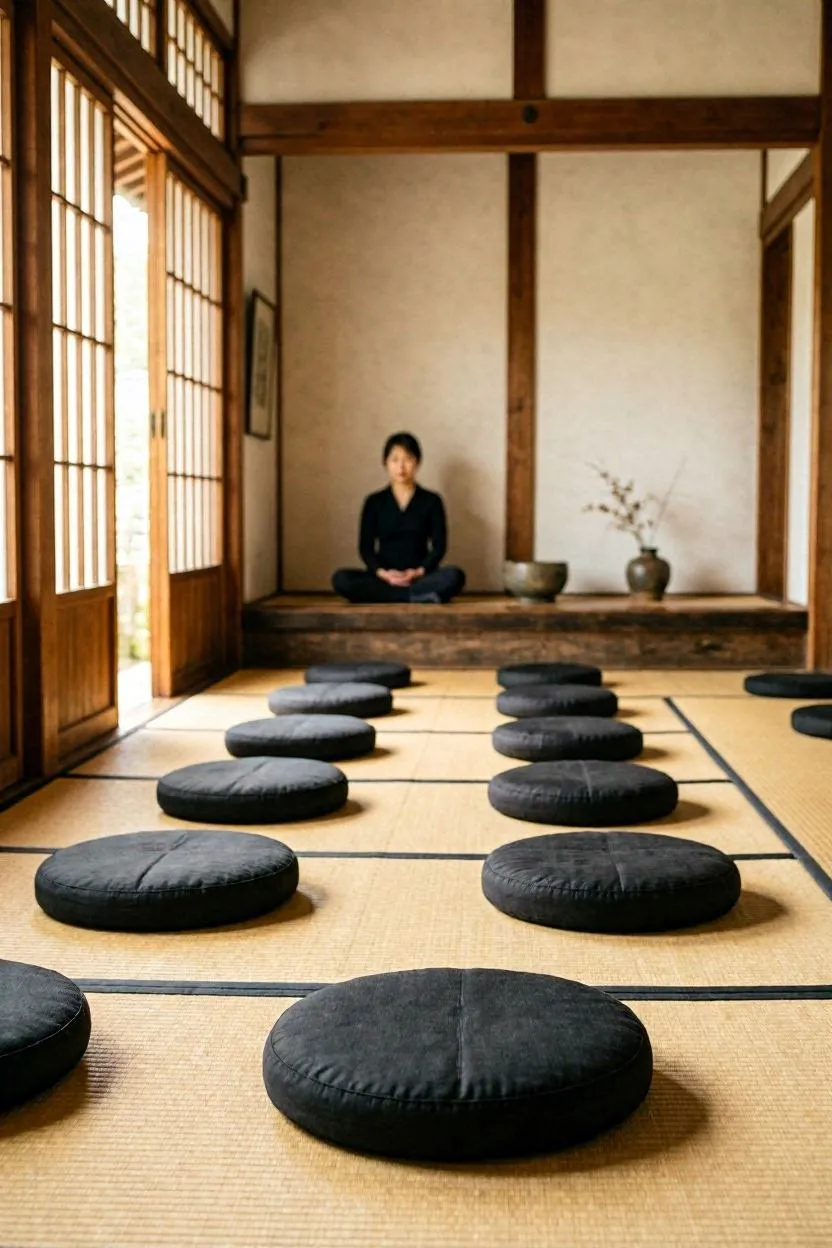
At Swallow Base, zazen is available as both a structured Academy program and a daily practice. Morning sits happen at the ryokan. Temple sessions are held at nearby Zen temples where priests have maintained their practice for generations.
How to sit zazen
Posture
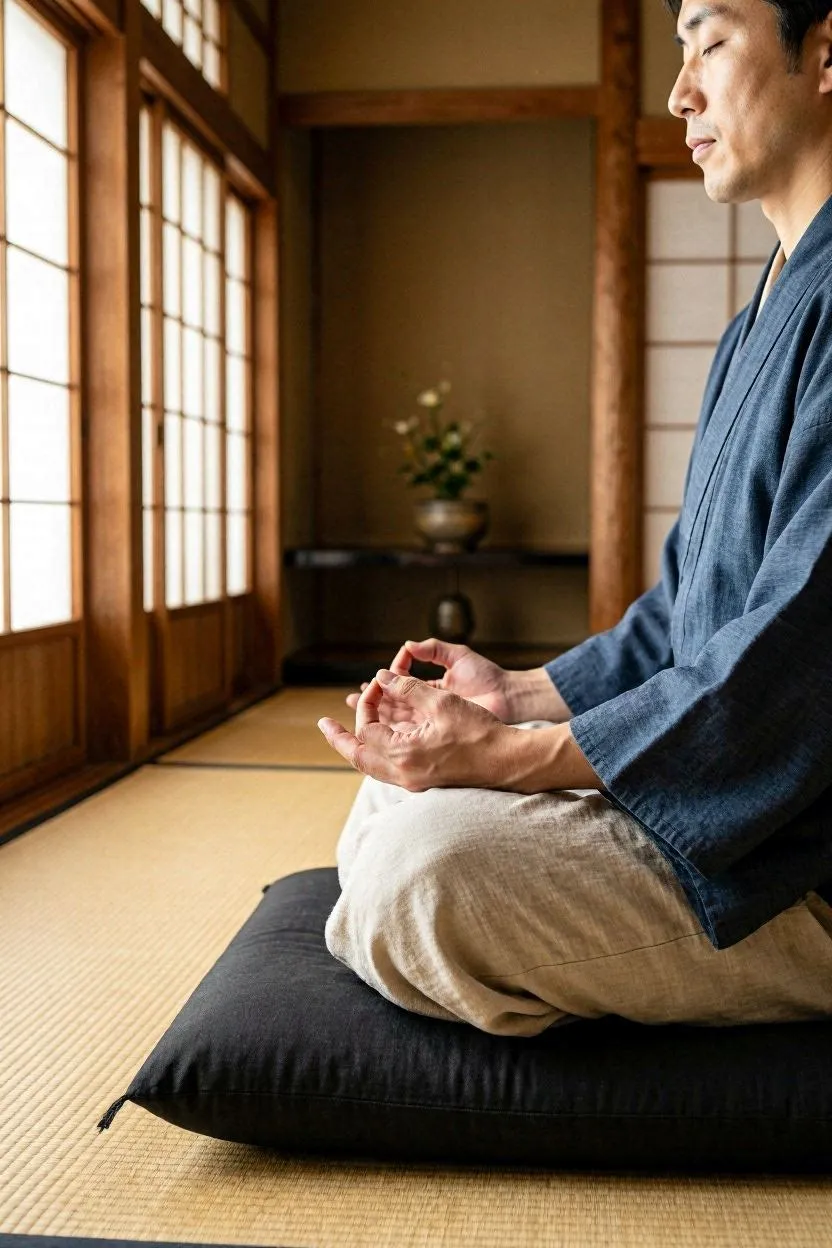
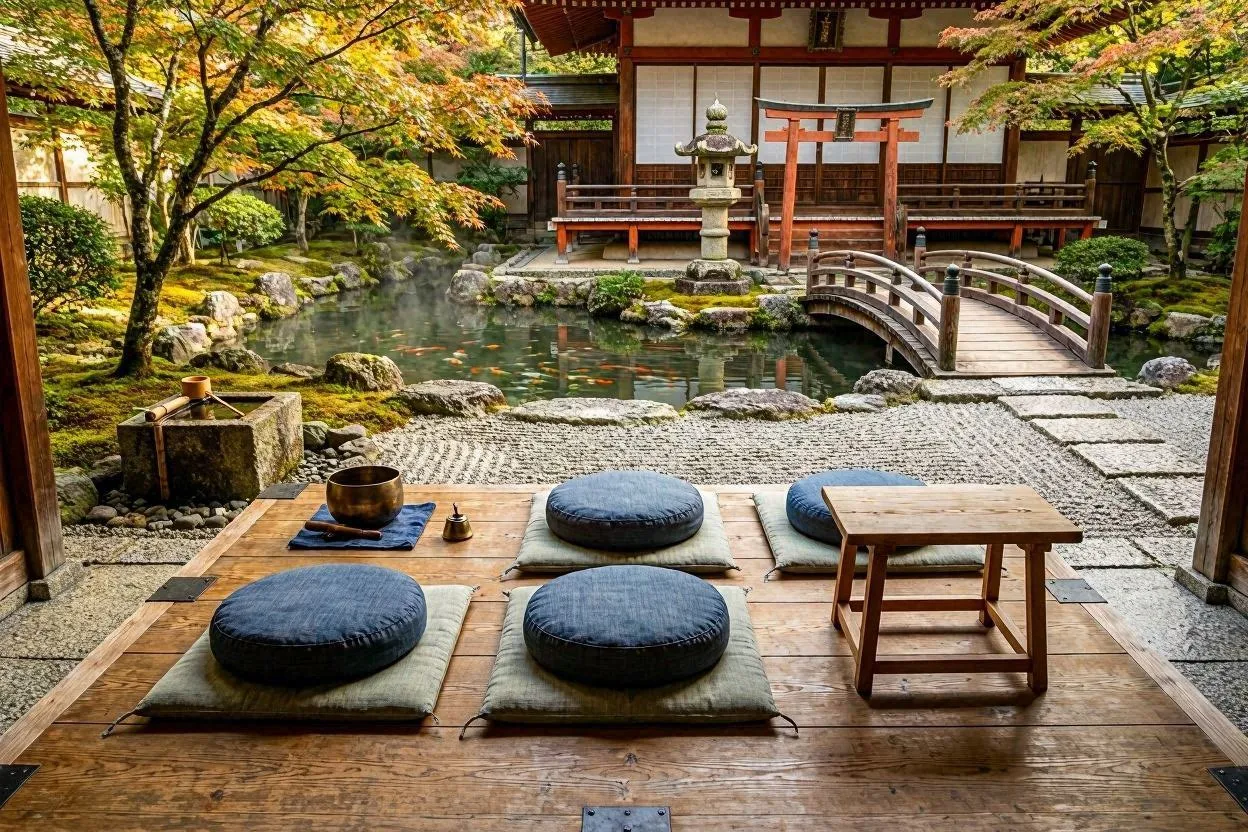
Sit on a round cushion (zafu) placed on a square mat (zabuton). Legs crossed in full lotus (kekkafuza) or half lotus (hankafuza) — if neither works, Burmese position (both feet on the floor) is fine. Spine straight but not rigid. The key is that your knees and sitting bones form a stable tripod. Hands form the cosmic mudra (hokkai-join): left hand resting on right, thumbs lightly touching, forming an oval held at the navel.
Eyes & Breath
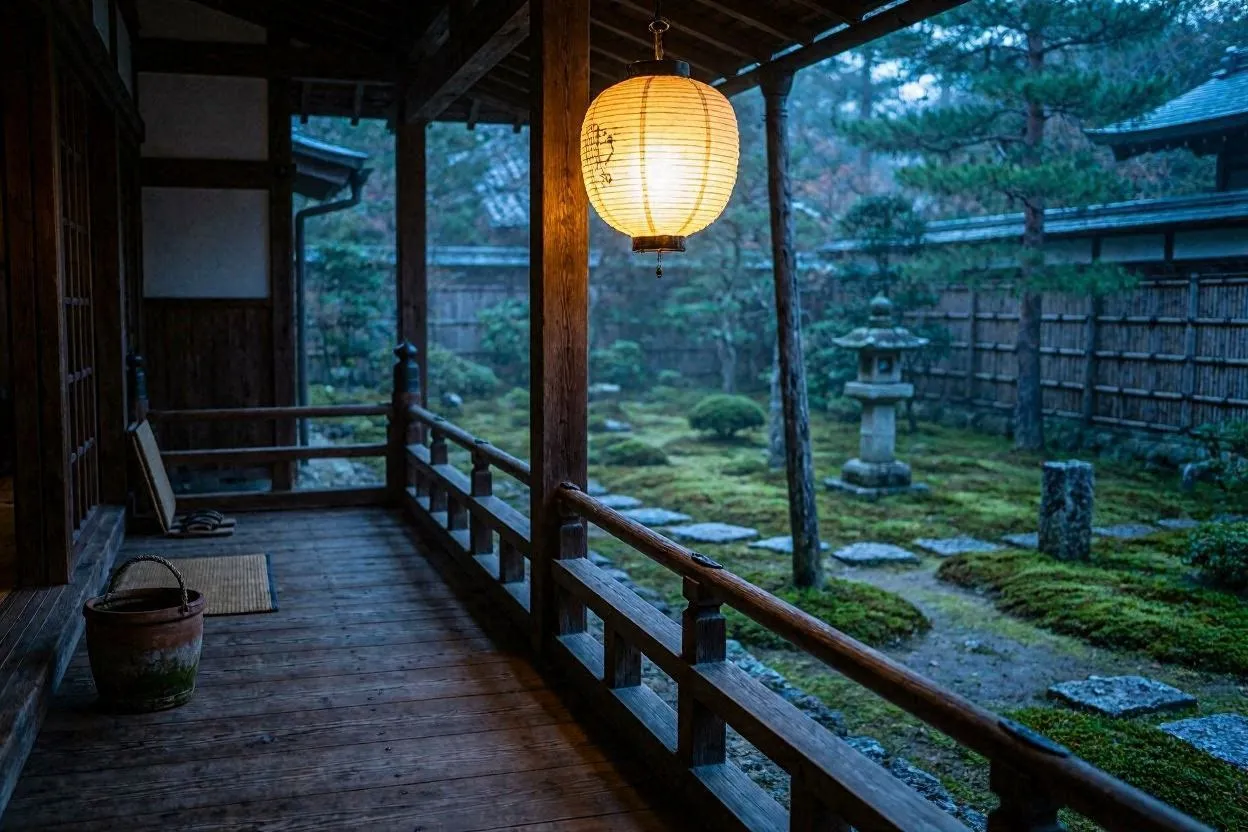
Eyes remain half-open, gaze lowered to the floor about one meter ahead. This is not concentration on a point — it's a soft, unfocused awareness. Closing the eyes entirely invites drowsiness; opening them fully creates distraction. Breathing is natural, through the nose. In Soto tradition, there's no counting or technique — you simply follow the breath. Some Rinzai teachers introduce counting (susokukan) for beginners: one to ten on the exhale, then start over.
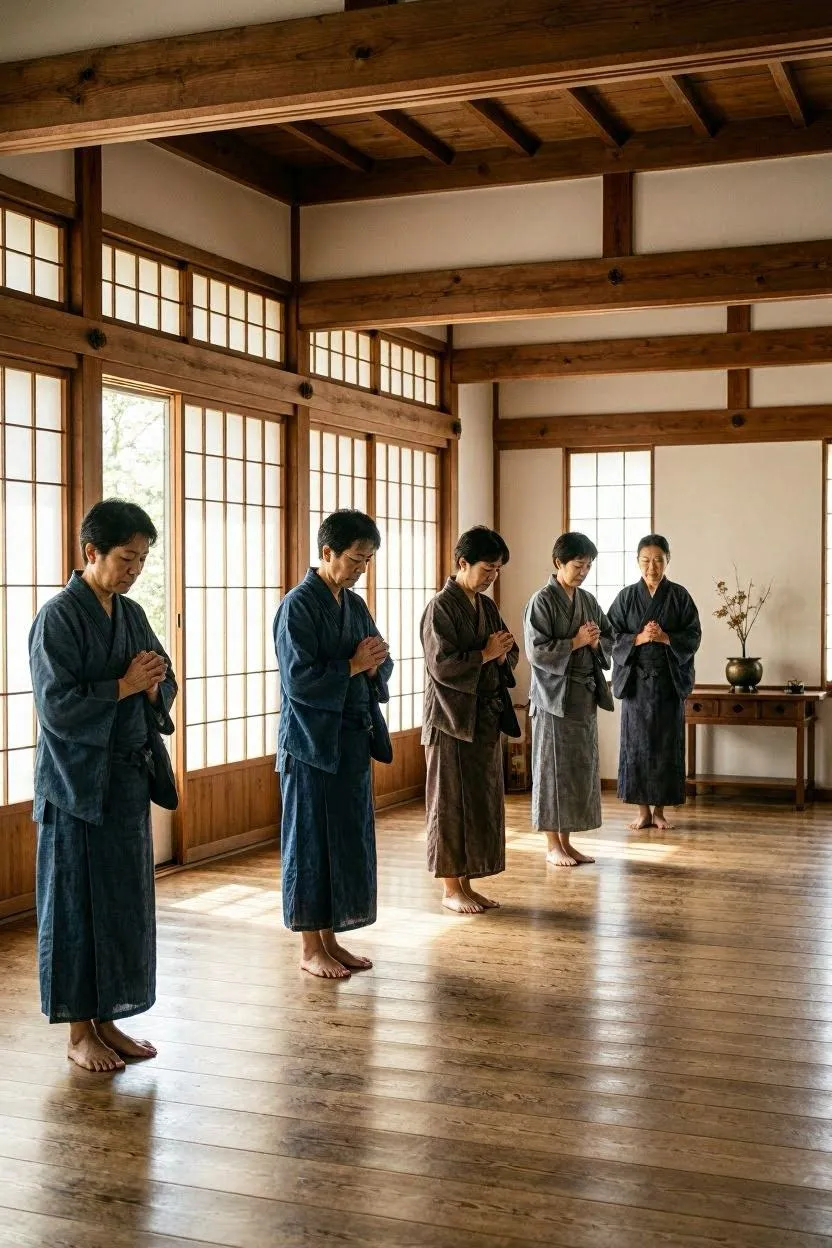
Kinhin (Walking Meditation)
Between sitting periods, practitioners do kinhin — slow, deliberate walking in a circle around the zendo. In Soto Zen, each step covers half a foot-length, synchronized with the breath. Hands are held in shashu position: left fist wrapped around the thumb at the solar plexus, right hand covering it. Kinhin is not a break from meditation — it is meditation in motion. In Rinzai temples, kinhin is faster, almost a brisk walk.
Soto Zen & Rinzai Zen
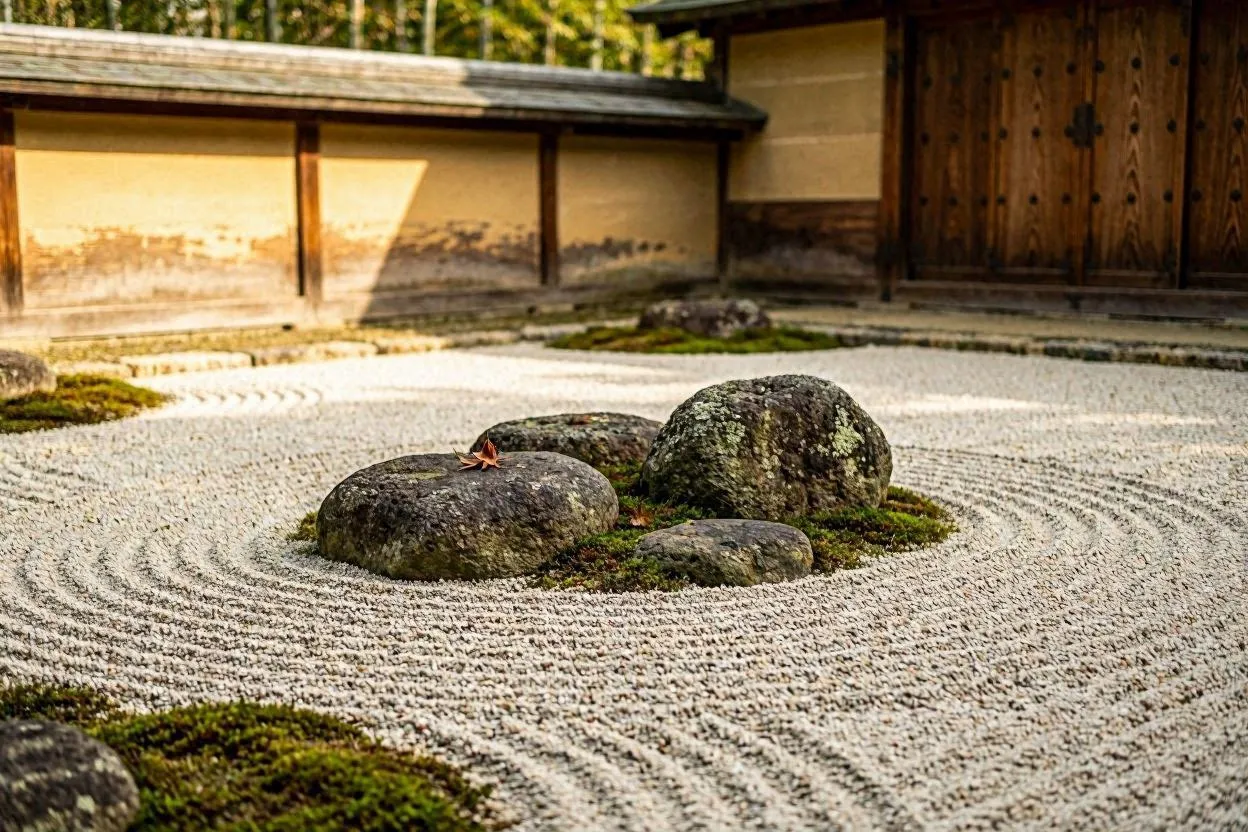
Soto Zen (曹洞宗) was established by Dogen Zenji after his return from China in 1227. Its practice centers on shikantaza — "just sitting" — meditation without object, technique, or goal. Soto practitioners sit facing the wall. The philosophy is that practice and enlightenment are not separate: sitting itself is the expression of Buddha-nature, not a means to achieve it. Soto is the larger school in Japan, with roughly 15,000 temples.
Rinzai Zen (臨済宗) was brought to Japan by Eisai in 1191. It uses koans — paradoxical questions like "What is the sound of one hand clapping?" — as meditation tools to break through rational thinking. Rinzai practitioners sit facing each other across the zendo. The relationship with the teacher (roshi) is more intense: students present their koan understanding in private interviews (sanzen/dokusan). Rinzai has roughly 6,000 temples in Japan.
The encouragement stick
The kyosaku (警策) — a flat wooden stick carried by the jikijitsu (session leader) — is perhaps the most misunderstood element of zazen practice. It is not punishment. In Soto tradition, a meditator who feels drowsy or distracted can request a strike by pressing their palms together (gassho). In Rinzai tradition, the jikijitsu may offer it when noticing a student's posture slumping.
The strike lands on the trapezius muscle at the junction of the neck and shoulder — an acupressure point that releases tension and sharpens alertness. Two quick strikes on each side, preceded and followed by a mutual bow. Many practitioners describe it as clarifying rather than painful.
At Swallow Base temple sessions, the kyosaku is always optional. You bow if you'd like to receive it; otherwise you're left in peace.
How sessions work
Morning practice (daily): Optional 30-minute sit at the ryokan, 6:30am. No instruction — just a quiet space, a zafu, and a bell to begin and end. Open to all guests.
Temple sessions: Guided 90-minute sessions at a local Zen temple. Includes posture instruction, two 25-minute sitting periods with kinhin between them, and a brief dharma talk from the temple priest.
Temple etiquette: Remove shoes at the entrance. Bow when entering the zendo. Wear dark, loose clothing. No phones, watches, or fragrance. Arrive 10 minutes early to settle in.
Extended stays: Guests staying two weeks or longer can arrange multi-day practice intensives at the temple, including participation in morning sutra chanting (朝課, choka) and samu (work meditation).
Zen at the ryokan
Zen practice does not stay on the zafu. At a ryokan, the structure of daily life — bathing, eating, cleaning, working — already mirrors the rhythm of a temple. Meals are eaten mindfully. Spaces are kept spare. The onsen teaches you to slow down before the day begins.
This is why Swallow Base's format — long stays, not weekend retreats — matters for Zen practice. Dogen wrote that "practice is enlightenment." Not practice leads to enlightenment. The ordinary moments are the practice, if you attend to them.
Explore all Academy programs
Zen & Meditation is one of five learning paths at Swallow Base. Each is rooted in its region and led by local practitioners.