Onsen Culture & Toji
湯治The history, science, and ritual of Japan's 1,000-year bathing tradition — from mineral chemistry to the art of doing nothing in hot water.
Bathing as culture, not luxury
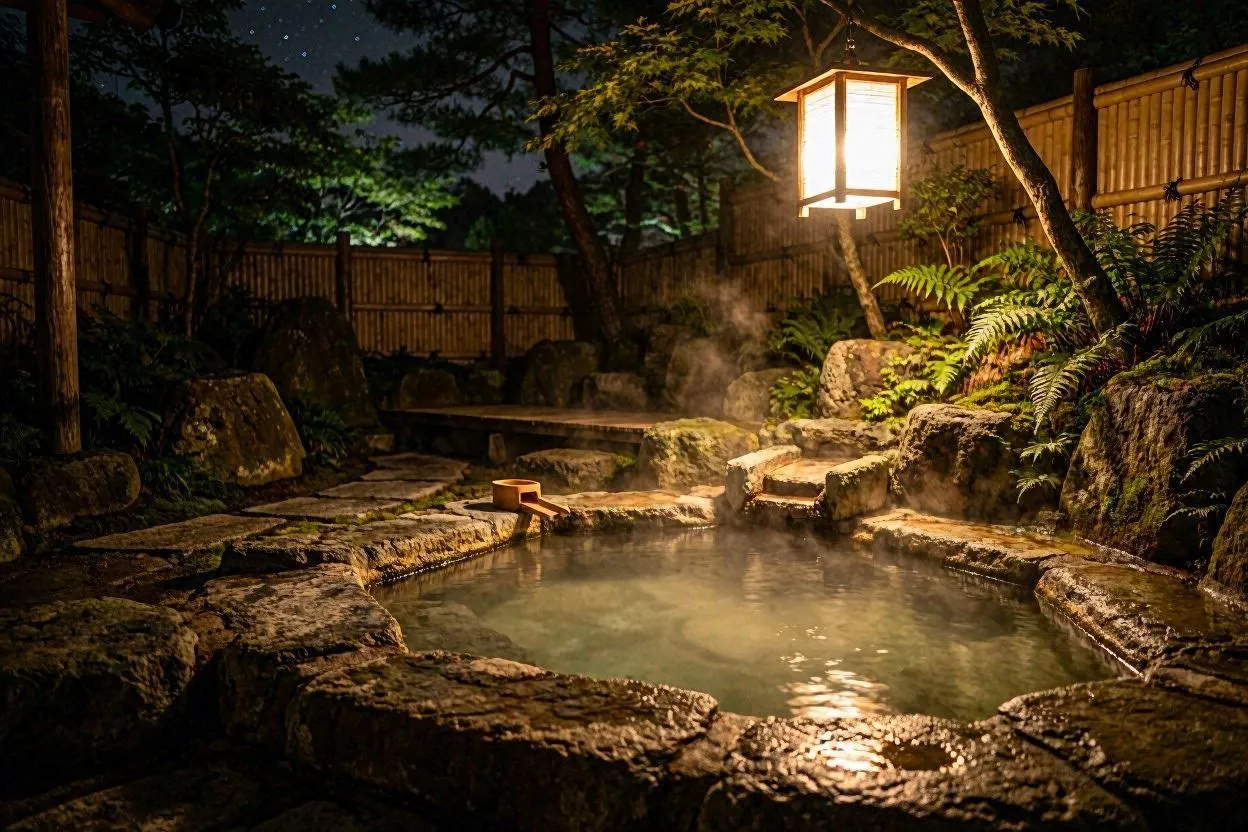
Japan sits on the Pacific Ring of Fire. The same tectonic forces that produce earthquakes also heat groundwater through volcanic activity, pushing it to the surface as hot springs. With over 27,000 natural hot spring sources and roughly 3,000 onsen resorts, Japan has more thermal bathing facilities than any country on Earth.
Onsen bathing has been documented in Japan since at least the 8th century. The three oldest onsen — Dogo (Ehime), Arima (Hyogo), and Nanki-Shirahama (Wakayama) — claim histories stretching back over 1,000 years. But onsen culture is not a relic. Over 120 million visits to onsen facilities are recorded annually in Japan. It remains a central part of daily life in hot spring regions.
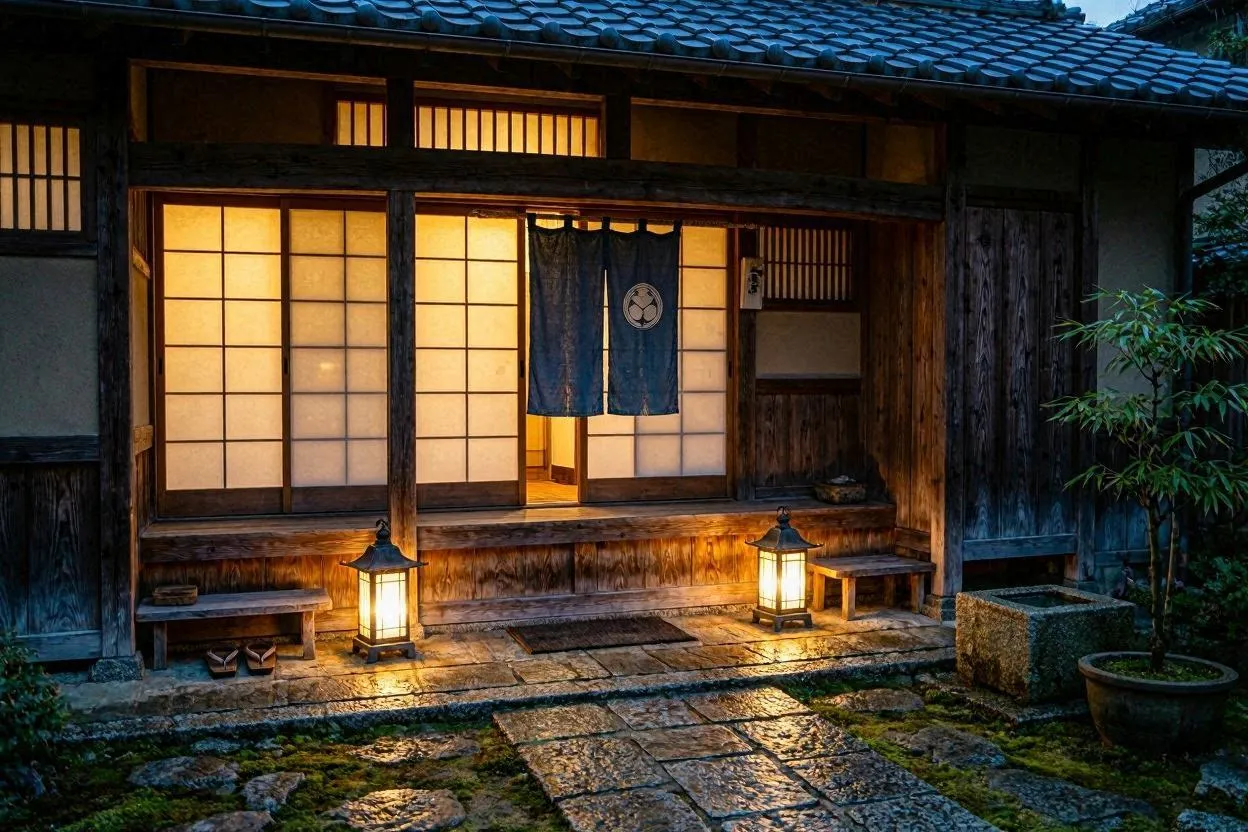
At Swallow Base, every location is an onsen ryokan. The water is not piped from a distant source or artificially heated — it rises naturally from the ground beneath you. Understanding what you're soaking in, and why people have been doing it for a millennium, is what this program is about.
The extended healing stay
Toji (湯治, literally "hot water cure") is the traditional Japanese practice of extended hot spring stays for health. Unlike a weekend trip to an onsen resort, toji historically meant staying for weeks — often two to four weeks — bathing multiple times daily in mineral-rich water to treat specific conditions.
The practice was formalized during the Edo period (1603-1868), when physicians would prescribe specific onsen for specific ailments. Kusatsu for skin conditions. Beppu for joint pain. Arima for nervous disorders. Patients would stay at simple toji ryokans — no-frills inns with self-catering kitchens, designed for long stays rather than luxury weekends.
Toji declined in the 20th century as Western medicine became dominant, but it has seen a revival in recent decades. Japan's Ministry of the Environment still officially categorizes therapeutic hot springs, and balneotherapy (hot spring therapy) is covered by some Japanese health insurance plans when prescribed by a physician.
Swallow Base's model — stays of one to four weeks at onsen ryokans — is essentially a modern toji framework adapted for remote workers. The bathing is real; the therapeutic tradition is genuine.
Types of hot springs
Japan's Ministry of the Environment classifies therapeutic hot springs into ten categories based on their dominant mineral composition. Each type has different properties and traditional therapeutic uses.
Simple Thermal Springs (単純温泉)
Low mineral concentration, gentle on the skin. The most common type in Japan. Suitable for sensitive skin and long soaks. Traditionally recommended for general fatigue, neurological conditions, and recovery from illness. Ureshino's springs are partially in this category.
Sodium Bicarbonate Springs (ナトリウム-炭酸水素塩泉)
Alkaline water (pH 8.5+) that softens skin by dissolving sebum and old keratin — earning these springs the nickname "bijin no yu" (beauty springs). Ureshino Onsen is famous for this type. The water feels silky, almost slippery. Traditionally used for skin conditions, burns, and chronic digestive issues.
Sulfur Springs (硫黄泉)
Recognizable by their rotten-egg smell (hydrogen sulfide gas) and milky white or yellow-green water. The most medicinally potent type — sulfur promotes blood circulation, lowers blood pressure, and has antimicrobial properties. Historically prescribed for skin diseases, rheumatism, and heavy metal poisoning. Noboribetsu and Kusatsu are famous sulfur springs.
Chloride Springs (塩化物泉)
High sodium chloride (salt) content. The salt forms a thin film on the skin after bathing, which retains heat — making these springs excellent for cold weather and chronic chills. The second most common spring type in Japan. Traditionally used for joint pain, poor circulation, and gynecological conditions. Atami is a well-known chloride spring.
Iron Springs (含鉄泉)
Water rich in ferrous or ferric iron — often clear when it emerges but turns rust-brown when exposed to air (oxidation). Traditionally prescribed for anemia and menstrual disorders, as iron can be absorbed transdermally in small amounts. Arima Onsen's famous "kin-sen" (gold water) is an iron-rich spring.
Radioactive Springs (放射能泉)
Contain trace amounts of radon gas. Despite the alarming name, the radiation levels are extremely low — below background levels in many cities. The theory of "radiation hormesis" suggests that very low doses stimulate cellular repair mechanisms. Misasa Onsen in Tottori (one of the world's highest-radon springs) has been studied by researchers from Okayama University for decades.
How to bathe properly
Onsen etiquette is not complicated, but it is strict. The rules exist because you're sharing water with others — and because Japanese bathing culture treats the onsen as a communal space that belongs to everyone in it.
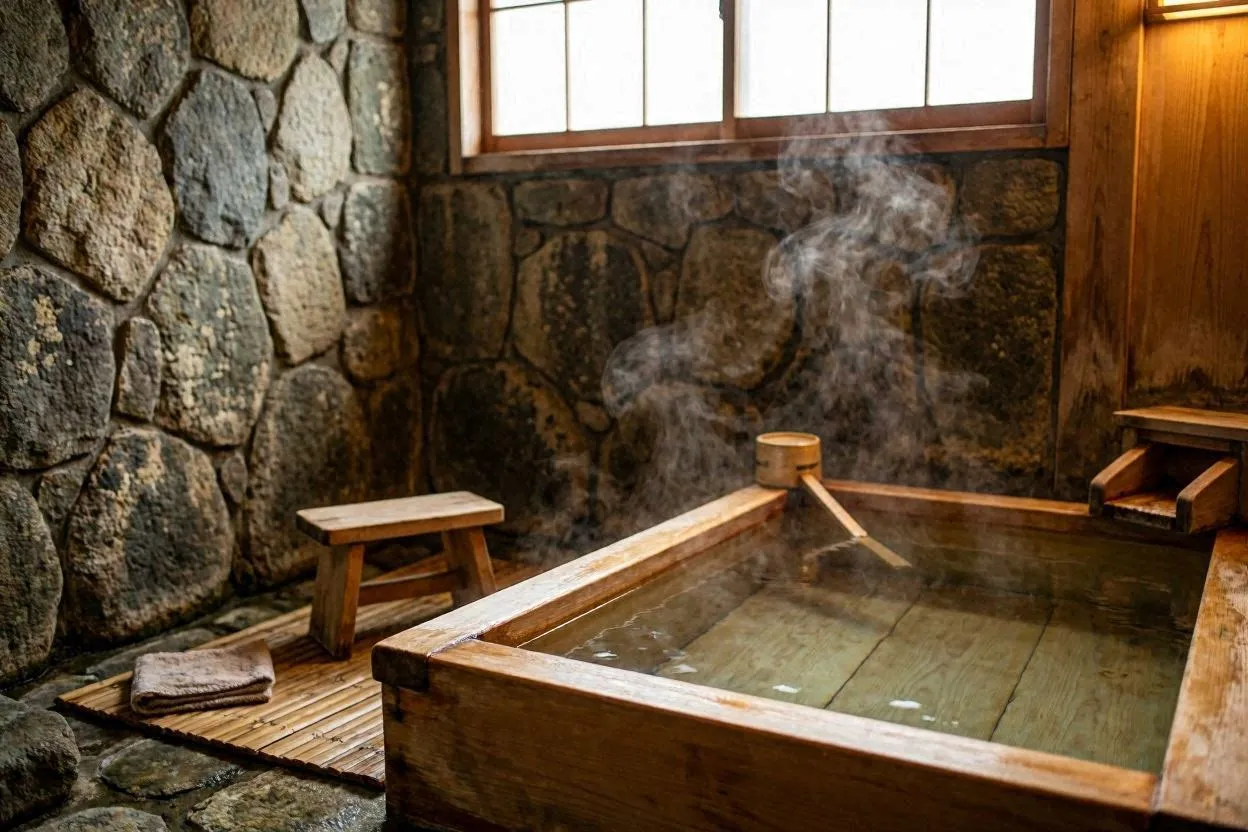
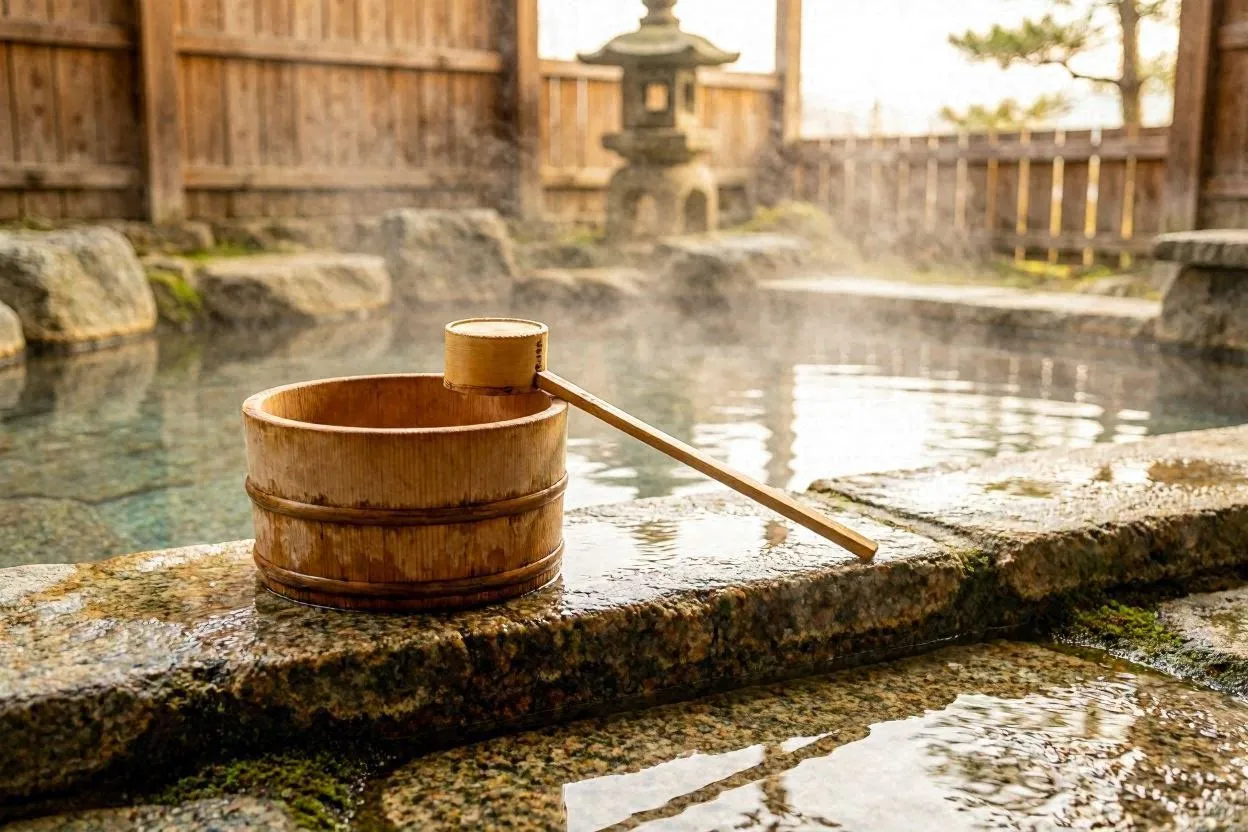
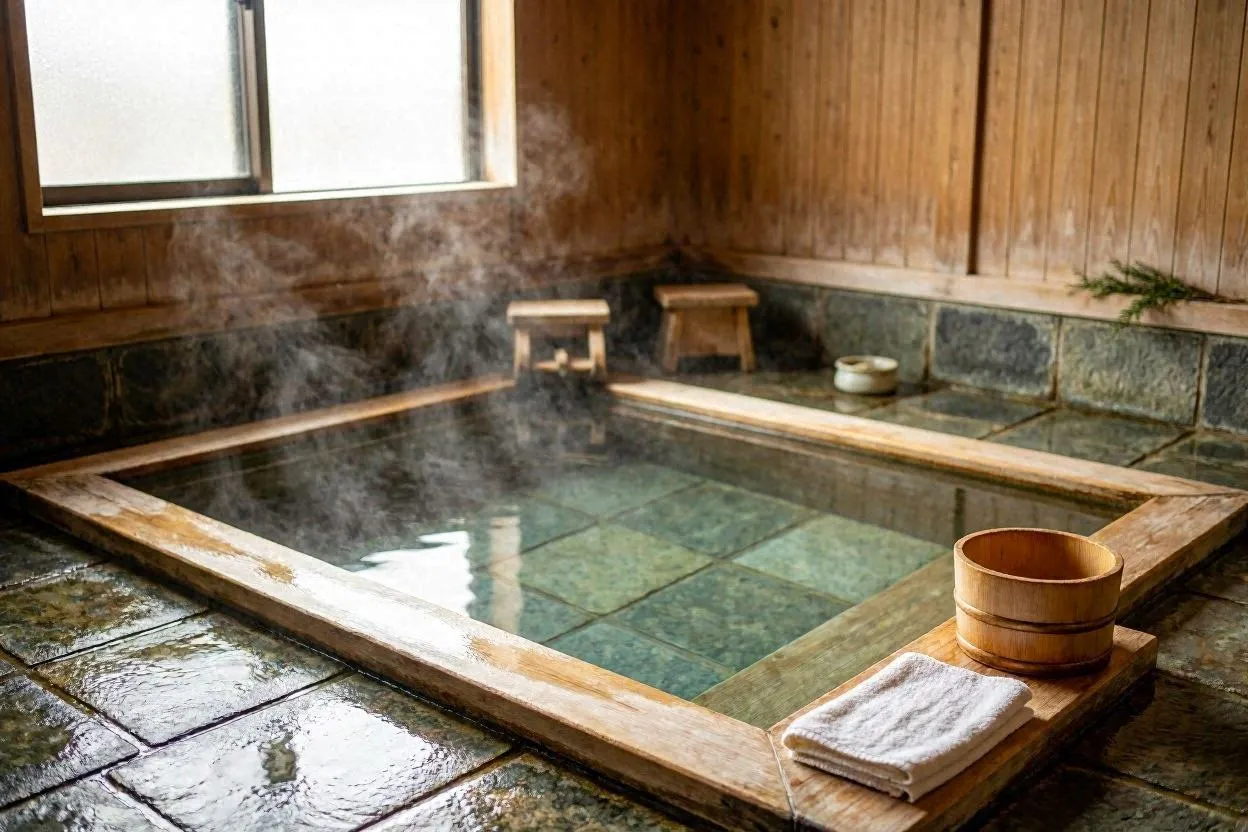
Kake-yu (かけ湯): Before entering the bath, sit at a washing station and rinse your entire body thoroughly. This is non-negotiable. The bath is for soaking, not cleaning. Pour water over yourself using the wooden bucket provided — start from your feet and work up to let your body adjust to the temperature.
The small towel: You'll carry a small hand towel (tenugui) into the bathing area. It's used for washing and modesty during the walk from the changing room. Once you enter the water, fold it and place it on your head — never submerge it in the bath.
Hair up: Long hair must be tied up so it doesn't touch the water. Bring a hair tie.
No phones, no swimwear: Onsen are entered naked. No swimsuits, no photography. This is a universal rule across Japan.
Tattoo policies: Many onsen in Japan prohibit entry for guests with tattoos — a policy rooted in the historical association between tattoos and yakuza (organized crime). This is changing slowly, particularly in international-facing establishments. Swallow Base locations are selected to be tattoo-friendly. Guests with tattoos can bathe without restriction at our partner ryokans. If visiting an outside onsen during your stay, we can advise which facilities welcome tattooed guests.
Quiet and slow: The onsen is not a swimming pool. Move slowly, speak quietly, don't splash. The atmosphere is contemplative. Many regular bathers go to the onsen specifically for silence — early morning, when the steam rises against a dark sky, and you're the only person in the water.
After bathing: Some onsen purists avoid showering after the bath, allowing the minerals to remain on the skin. In springs with high sulfur content, this is genuinely therapeutic. In acidic springs, a quick rinse may be advisable for sensitive skin. Hydrate well — a 15-minute soak at 42°C can be as cardiovascularly demanding as moderate exercise.
What you'll learn
History & Culture
The evolution of onsen from religious purification (misogi) to Edo-period toji resorts to modern tourism. How onsen shaped Japanese architecture (the ryokan form), social customs (naked communal bathing as an equalizer), and regional economies. The role of onsen in Japanese literature, from Sei Shonagon's Pillow Book to Kawabata Yasunari's Snow Country.
Balneology & Mineral Science
Understanding the ten spring classifications, mineral absorption through skin (transdermal uptake), the physiological effects of heat immersion (vasodilation, cortisol reduction, parasympathetic activation), and the difference between onsen (natural mineral springs, legally defined) and sento (public baths using heated tap water). Reading an onsen analysis chart (温泉分析表) — the mineral composition card posted at every licensed onsen.
Bathing Ritual & Practice
The full bathing sequence from changing room to bath and back. Optimal soak duration and temperature for different spring types. The practice of alternating hot and cold immersion (交代浴, kotai-yoku) — a technique used in toji to stimulate circulation. Rotenburo (outdoor bath) culture and the connection between open-air bathing and the Japanese concept of nature appreciation.
The Ryokan Experience
How the ryokan — traditional Japanese inn — evolved around onsen culture. The rhythm of a ryokan stay: afternoon arrival, first bath, kaiseki dinner, evening bath, futon laid out by nakai-san, morning bath, breakfast. Understanding yukata (cotton robe) as daytime and evening wear within the ryokan. The role of the okami-san (proprietress) in maintaining the ryokan's character.
How sessions work
Location: All Swallow Base locations. The program content adapts to each location's specific spring type and regional onsen history.
Format: A combination of classroom sessions (history, science, reading mineral analysis charts) and guided bathing practice at the ryokan and nearby onsen facilities. The program includes visits to historic onsen buildings and, where available, sentos and ashiyu (public foot baths).
Duration: Two 90-minute sessions covering culture, science, and etiquette. Guided bathing experiences are woven into daily ryokan life throughout your stay.
Note: This program involves communal bathing. If you're not comfortable with that, the classroom/history portions can be taken independently. We're happy to discuss options.
Explore all Academy programs
Onsen Culture & Toji is one of five learning paths at Swallow Base. Each is rooted in its region and led by local practitioners.