Culinary Arts
料理Washoku cooking with local ingredients, seasonal traditions, and the techniques that make Japanese cuisine a UNESCO Intangible Cultural Heritage.
Food as a cultural practice
In 2013, washoku (和食, traditional Japanese cuisine) was inscribed on UNESCO's Intangible Cultural Heritage list — not for any single dish, but for the entire food culture: its emphasis on seasonal ingredients, its balanced nutrition, its role in social bonding, and its deep connection to annual events and rituals.
At the core of washoku is shun (旬) — eating what is in season, at its peak. This is not a modern farm-to-table trend. It's a framework that has structured Japanese cooking for centuries. Bamboo shoots in spring, ayu sweetfish in summer, matsutake mushrooms in autumn, root vegetables in winter. The menu follows the calendar, not the other way around.
At Swallow Base, culinary sessions work with whatever the season and region offer. In Ureshino, that means tea-infused cuisine and silky onsen tofu. In Izu, it means seafood pulled from the Pacific that morning. The ingredient dictates the technique — not a recipe book.
What grows here, gets cooked here
Ureshino — Saga Prefecture
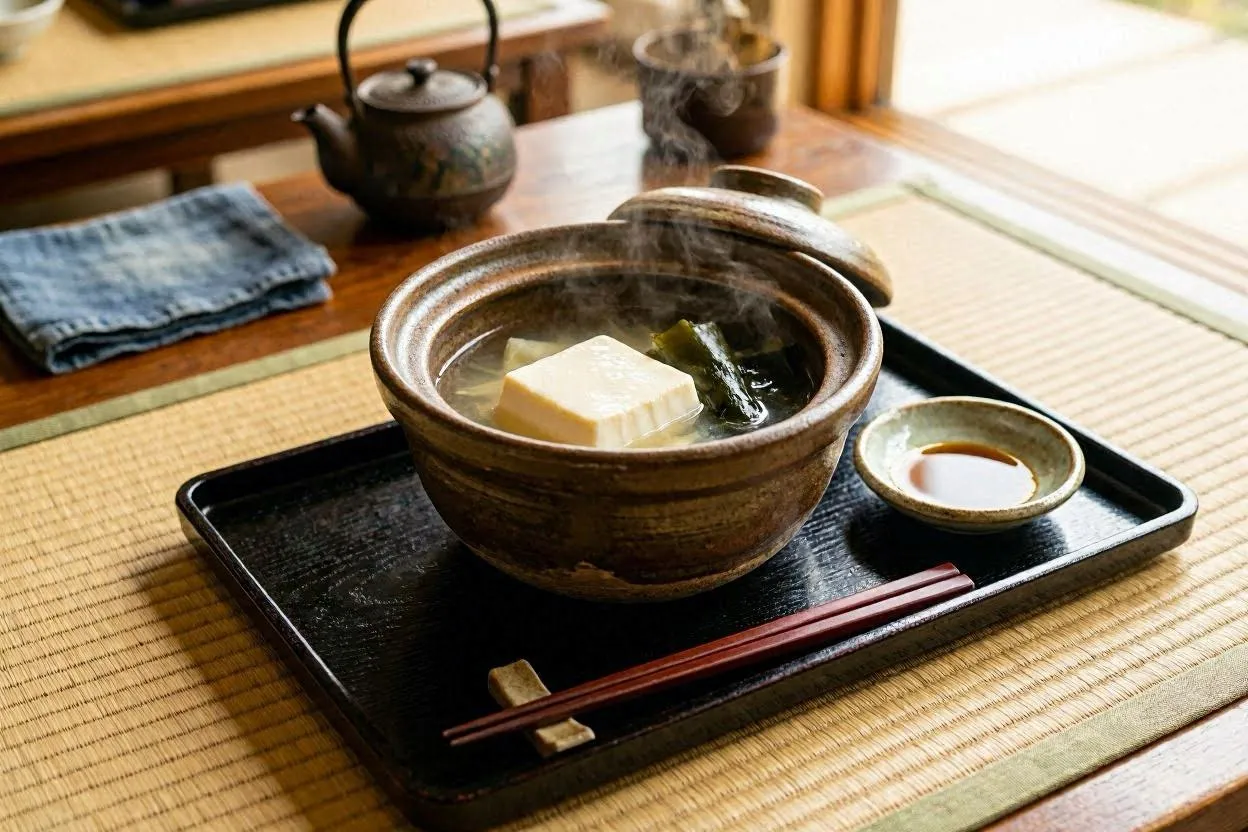
Yudofu (湯豆腐): Ureshino's hot spring water is alkaline (sodium bicarbonate), which gives the local yudofu its signature silky, almost creamy texture. The same mineral properties that make the onsen famous for softening skin also transform ordinary tofu into something remarkably smooth. It's served simply — in a clay pot with kombu and a citrus-soy dipping sauce.
Green tea cuisine: In a region defined by tea cultivation, the leaves show up everywhere — tea-smoked fish, tempura of fresh tea leaves, tea-infused rice porridge (ochazuke), and sweets made with matcha or hojicha. Ureshino's kamairi-cha adds a toasted, nutty dimension that steamed teas lack.
Saga beef: Less famous than Kobe or Matsusaka, but Saga beef is rated among Japan's top wagyu. The marbling is intense, and it appears in local cuisine as thin-sliced shabu-shabu or grilled over charcoal.
Izu — Shizuoka Prefecture
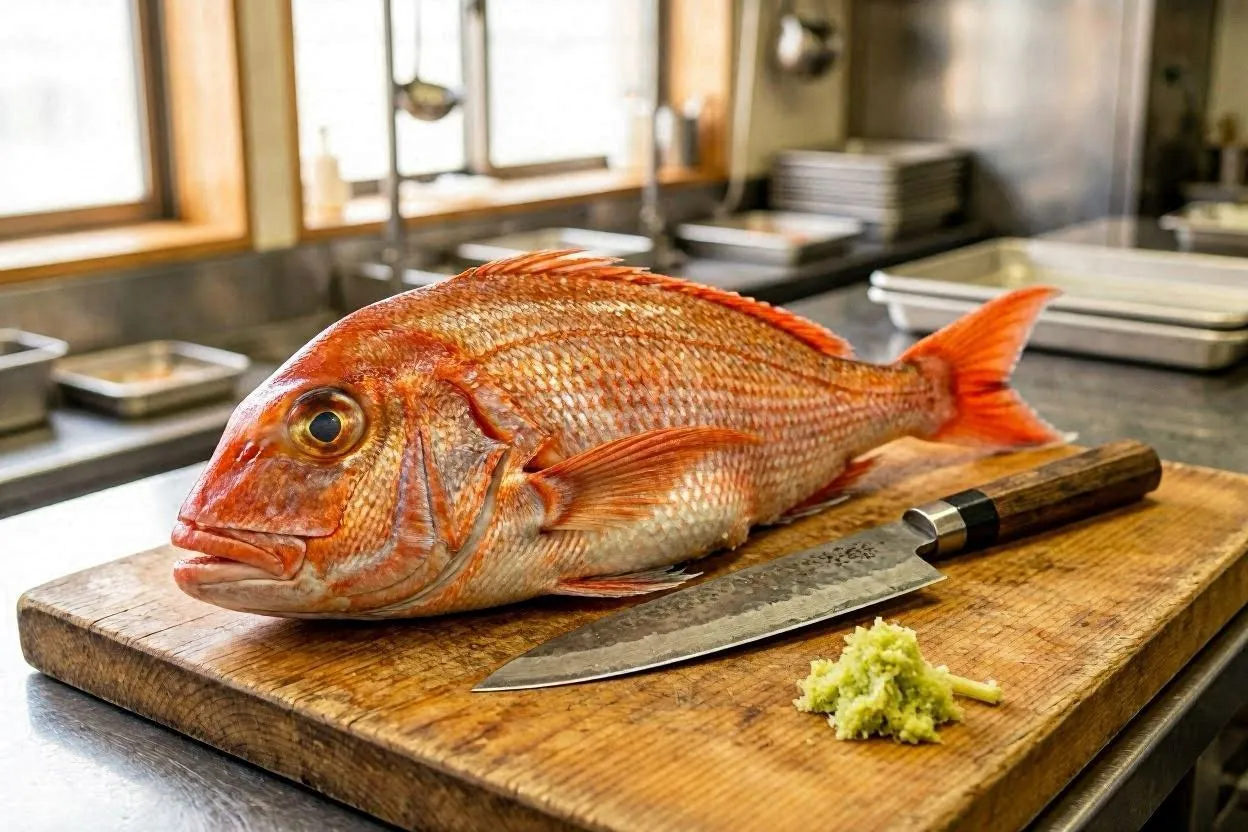
Kinmedai (金目鯛): Golden eye snapper is Izu's signature fish — a deep-water species with brilliant red skin and rich, fatty flesh. The classic preparation is nitsuke: simmered in a sweet soy sauce reduction with ginger. The fish is so associated with the region that Shimoda (southern Izu) has declared it the city fish.
Fresh wasabi: The Amagi mountain range in central Izu is one of Japan's primary wasabi-growing regions. Real wasabi — freshly grated from the rhizome — bears almost no resemblance to the reconstituted horseradish paste served in most restaurants worldwide. It's floral, complex, and heat that dissipates quickly rather than burning.
Aji no himono (鯵の干物): Horse mackerel, butterflied and sun-dried, then grilled over charcoal. A staple breakfast across Izu that exemplifies the Japanese preservation tradition — intensifying flavor through controlled dehydration. Numazu, at the base of the Izu Peninsula, is the country's largest dried fish production center.
What you'll learn
Knife Skills — 包丁
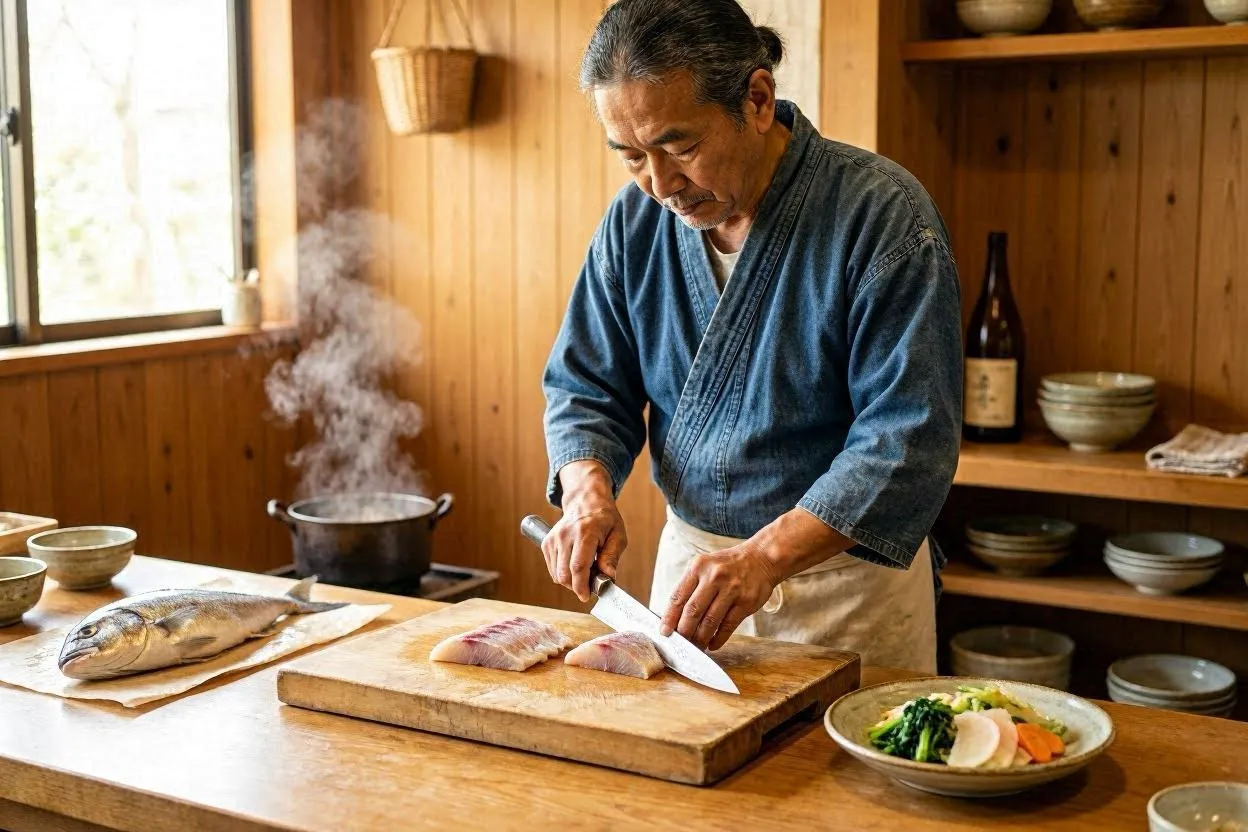
Japanese kitchen knives (hocho) are single-bevel — sharpened on one side only — which allows for thinner, more precise cuts than Western double-bevel knives. You'll learn the three essential knives: the deba (thick-spined, for breaking down fish), the yanagiba (long, thin, for slicing sashimi in a single pull), and the usuba (thin, flat, for vegetables).
Core cuts include katsuramuki (rotary peeling a daikon into a continuous paper-thin sheet), sainome (precise cubes), and sengirigiri (fine julienne). Knife work in Japanese cuisine is not about speed — it's about respect for the ingredient. A clean cut preserves cell structure, which affects texture and flavor.
Dashi — 出汁
Dashi is the foundation of Japanese cooking — a stock so fundamental that it shapes the flavor of nearly every savory dish. The standard ichiban dashi (first extraction) is made from just two ingredients: kombu (kelp) and katsuobushi (dried, fermented, smoked bonito flakes). The kombu provides glutamic acid (umami); the katsuobushi provides inosinic acid. Together, they create a synergistic umami effect roughly eight times more intense than either alone.
You'll learn to make ichiban dashi (for clear soups and delicate dishes) and niban dashi (a second extraction for simmered dishes and miso soup). Also covered: niboshi dashi (from dried sardines), shiitake dashi (vegetarian, from dried mushrooms soaked overnight), and regional variations.
Fermentation — 発酵
Japanese cuisine relies on fermentation more than almost any other culinary tradition. Miso (fermented soybean paste, aged 6 months to 3 years), shoyu (soy sauce, fermented with koji mold for 6-18 months), mirin (sweet rice wine), sake, rice vinegar, and nukazuke (vegetables pickled in rice bran) all depend on controlled fermentation.
The key organism is Aspergillus oryzae — koji mold — which Japan declared a "national fungus" (kokkin) in 2006. You'll learn how koji transforms starches into sugars and proteins into amino acids, and how to start a basic nukazuke bed (nukadoko) that can be maintained for years — some in Japan have been passed down for generations.
How sessions work
Location: Ryokan kitchen or a local restaurant kitchen, depending on the session. Market visits to local producers are included in multi-day courses.
Duration: 2-3 hour sessions for single topics (knife skills, dashi, a specific dish). Full-day courses combine a morning market visit with afternoon cooking. Multi-day courses available for extended-stay guests.
What's included: All ingredients and equipment. You eat what you cook — sessions end with a shared meal.
Dietary considerations: Sessions can accommodate vegetarian, vegan, and halal requirements. Shojin ryori (Buddhist temple cuisine, entirely plant-based) is available as a dedicated session.
Explore all Academy programs
Culinary Arts is one of five learning paths at Swallow Base. Each is rooted in its region and led by local practitioners.